

- Center on Health Equity & Access
- Clinical
- Health Care Cost
- Health Care Delivery
- Insurance
- Policy
- Technology
- Value-Based Care
Seborrheic Dermatitis Linked to Higher Risk of Epithelial Barrier Diseases
A study links seborrheic dermatitis to multiple epithelial barrier diseases, supporting broader assessment for inflammation and barrier dysfunction.
Seborrheic dermatitis may be linked to various epithelial barrier diseases (EBDs) affecting multiple organ systems and ultimately a key factor when addressing epithelial barrier weakness and perpetuating inflammatory and immunological diseases, according to a recent study published in JAMA Dermatology.1
Seborrheic dermatitis affects approximately 5% of the global population and commonly presents in infancy as “cradle cap” or in adults and adolescents as “dandruff.” More severe cases, however, are not localized to the scalp but can appear in places where there are a lot of sebaceous glands, like the chest or groin area.2 Researchers hypothesize that seborrheic dermatitis’s disruption to the skin barrier can potentially further expose patients to other EBDs of the skin, respiratory tract, gastrointestinal tract, ocular surface, and chronic inflammatory conditions, better known as the epithelial barrier theory (EBT).


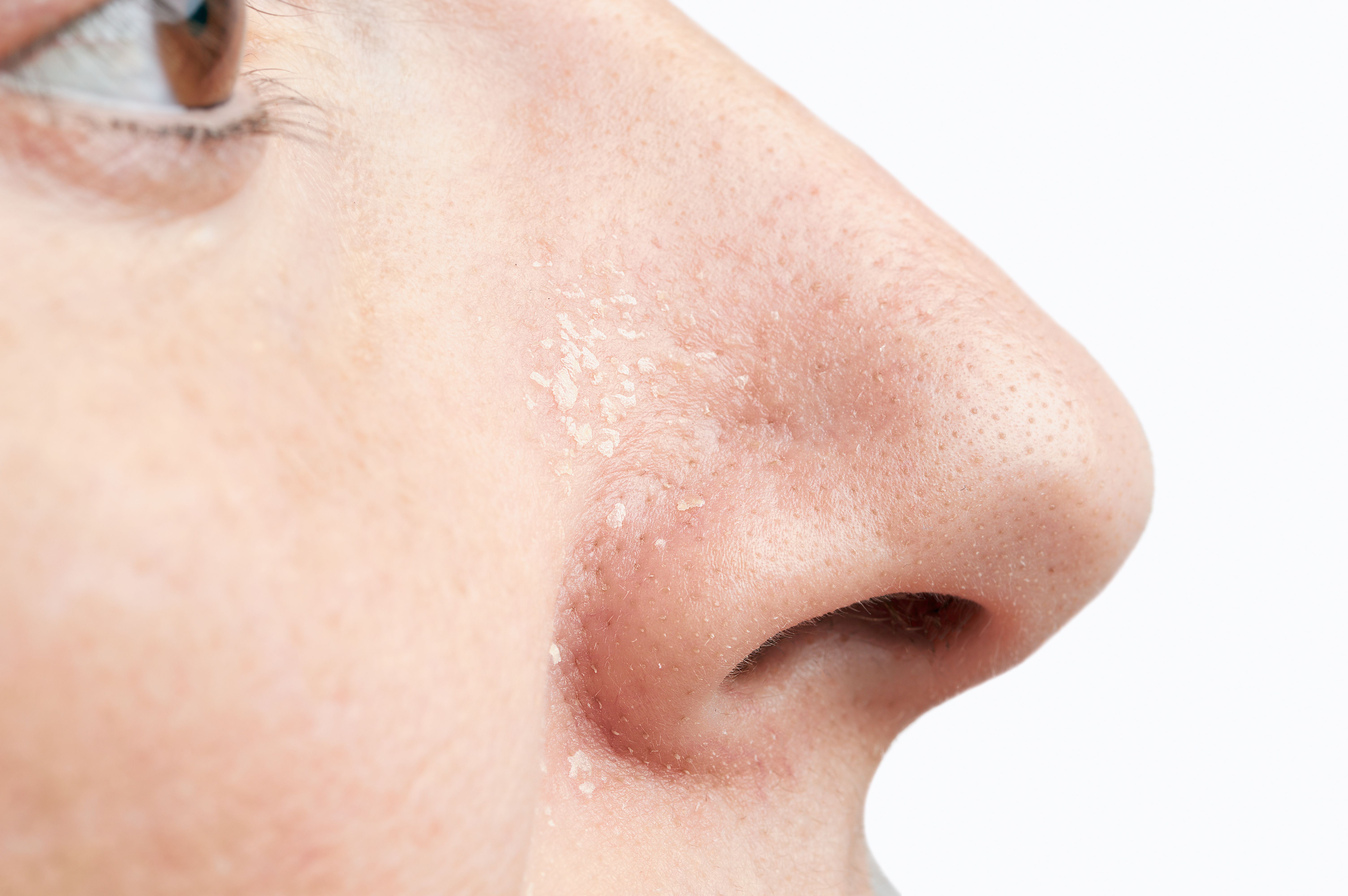
New research links seborrheic dermatitis to a wide range of epithelial barrier diseases, highlighting the need for earlier detection and integrated care. | Image Credit: @cunaplus-adobe.stockjpeg
The study’s retrospective cohort included more than 20 million people with at least 1 year of continuous enrollment from January 1, 2016, to June 30, 2022. The EBDs assessed were those present on the epithelial surface of the skin and included those related to the skin, respiratory, gastrointestinal, and ocular systems. Diagnostic codes were pulled from the International Statistical Classification of Diseases and Related Health Problems, Tenth Revision (ICD-10). ICD-10 codes were then used to determine the frequency of seborrheic dermatitis and EBDs. The primary outcome was the development of any EBD at any point during the observation period.
Of the 20,274,189 patients in the cohort, 733,775 (3.62%) had at least 1 diagnosis of seborrheic dermatitis. Out of those diagnosed with seborrheic dermatitis, 48.25% were male and 51.75% were female, and the median IQR range at enrollment was 62.63 years.
Given the large cohort size, researchers emphasized the clinical significance of the odds ratio (OR) as opposed to the size of the P value. Seborrheic dermatitis was positively associated with all dermatological conditions. The conditions that had the greatest association were alopecia areata (OR, 4.02; 95% CI, 3.93-4.11), rosacea (OR, 4.52; 95% CI, 4.49-4.56), atopic dermatitis (OR, 3.21; 95% CI, 3.18-3.24), psoriasis (OR, 3.26; 95% CI, 3.23-3.29), contact dermatitis (OR, 2.25; 95% CI, 2.23-2.26), and hidradenitis suppurativa (OR, 1.63; 95% CI, 1.58-1.68).
There were 2 conditions that were negatively associated with seborrheic dermatitis: chronic obstructive pulmonary disease (OR, 0.72; 95% CI, 0.71-0.72) and pulmonary hypertension (OR, 0.70; 95% CI, 0.69-0.71).
Based on these findings, the study authors encouraged more comprehensive assessment of patients with seborrheic dermatitis for other EBDs, with the hope of earlier detection and integrated treatment strategies.
The study was limited by the use of an administrative claims database, which excludes uninsured populations and individuals without regular access to health care. Additionally, diagnostic codes for many of the EBDs were limited, and unmeasured factors such as genetics, environment, or microbiota may influence disease relationships.
“Future studies can be conducted to investigate the temporal relationship between seborrheic dermatitis and EBDs and to explore the underlying molecular mechanisms linking seborrheic dermatitis to EBDs, which will better characterize the role of the EBT model in disease pathogenesis,” the study authors concluded.
References
1. Meng S, Berna R, Hoffstad O, et al. Epithelial barrier diseases among adult patients with seborrheic dermatitis. JAMA Dermatol. Published online November 05, 2025. doi:10.1001/jamadermatol.2025.4313
2. Seborrheic dermatitis: Causes, symptoms, treatment. National Eczema Association. February 25, 2025. Accessed November 19, 2025. https://nationaleczema.org/types-of-eczema/seborrheic-dermatitis


