

- Center on Health Equity & Access
- Clinical
- Health Care Cost
- Health Care Delivery
- Insurance
- Policy
- Technology
- Value-Based Care
Polarized Dermatoscopes Improve Teledermoscopy Image Quality but Raise Cost Barriers
Polarized dermatoscopes produced higher-quality teledermatology images but at greater cost, raising questions about feasibility and equitable access.
Patients with early-stage melanoma and dermatologists reported that polarized dermatoscopes were easier to use and praised the image quality compared with ambient-light, nonpolarized dermatoscopes. Their ease of use was reported as part of a randomized study embedded within the MEL-SELF trial (ACTRN12621000176864), with findings recently published in JAMA Dermatology.1
Dermatoscopes are handheld tools with a high magnification that allow dermatologists to assess structures beneath the epidermis and to the depth of the reticular dermis.2 In an effort to expand equity of access to teledermatology, patients were given smartphone-attached dermatoscopes to self-identify and collect lesion images for remote dermatologist evaluation.1 While this tool can serve as a bridge to access the quality of the images, it is a key source of variability in accurate diagnosis and assessment of lesions that guide clinical decision-making. The study used 2 types of dermatoscopes: an ambient-light, nonpolarized device and a built-in-light, polarized device.


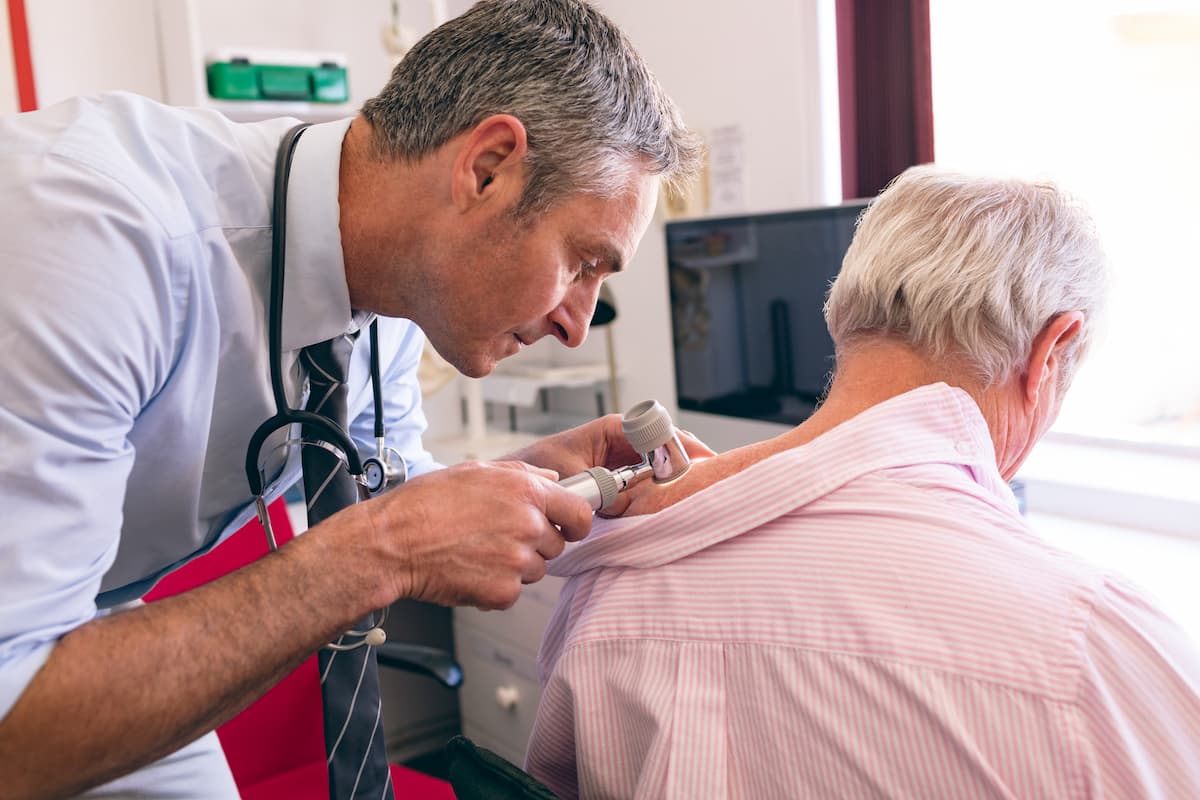
Patients and dermatologists found polarized dermatoscopes easier to use and producing higher-quality images, but their higher cost may limit broader adoption in teledermoscopy. | Image credit: wavebreak3 - stock.adobe.com
Polarized dermoscopy enhances visualization of deeper structures like vascular patterns and collagen alterations, whereas nonpolarized dermoscopy may only highlight physical features and requires direct skin contact with a liquid interface to minimize reflection.1 Polarized dermatoscopes, although superior compared with nonpolarized dermatoscopes, are significantly more expensive than the latter. The unit cost of a polarized dermatoscope is $324.16, whereas the mean cost of a nonpolarized device is $35.40.
“These differences in image quality and diagnostic utility must be weighed against the higher cost of illuminated, polarized devices, which could limit adoption of patient-performed teledermoscopy, particularly in user-pays settings where patients incur the expense directly,” the study authors wrote.
Which Type of Dermatoscope Is Most Feasible for Bridging Access to Care?
The parallel randomized study was embedded in the Australian MEL-SELF randomized clinical trial that evaluated surveillance post treatment for early-stage melanoma. The study was conducted between December 16, 2021, and June 3, 2024. A total of 251 participants were randomized 1:1 to use a lower-cost, ambient-light, nonpolarized dermatoscope or a higher-cost, illuminated, polarized dermatoscope. Patients used the devices to photograph lesions identified by their treating clinician, most of which were atypical but not clearly malignant.
Of the 251 participants, the mean age was 56.0 years, and 147 (59%) were female. The median estimated 1-year risk of subsequent melanoma was 8% (2%-91%).
The primary outcome was the proportion of patients who received a teledermatologist management recommendation either for follow-up teledermatology, in-person review, or monitoring for baseline images. Overall, 175 (69.7%) received baseline-image recommendations (polarized: 92 of 128 [71.9%]; ambient light: 83 of 123 [67.5%]; difference, 4.4%; 95% CI, –7.0% to 15.8%). Proportions of at least 1 teledermatologist recommendation declined over time in both groups, and there was no significant difference observed at any point.
Of the 1736 submitted, polarized images were more likely to receive a recommendation than ambient-light images (difference, 3.9%; 95% CI, 1.5% to 6.3%). Recommendations were also higher for self-detected lesions imaged with a polarized device compared with an ambient-light device (difference, 6.8%; 95% CI, 3.3%-10.2%).
Usability scores were numerically higher for the polarized devices: 50% of participants rated them as moderately easy or very straightforward to use compared with 42.3% who ranked the ambient light similarly.
The total cost for the polarized dermatoscopes was $37,362, (unit price, $291.29 after discounts), whereas the ambient light total cost was $3852.75 (unit price, $31.26 after discounts).
The study had several limitations: a small sample size, potential assessor bias from image features, reliance on highly experienced teledermatologists not reflective of typical practice, training and support that may not be replicable, and a participant population lacking vulnerable or remote groups, limiting generalizability. Variability in internet access could restrict teledermoscopy use in remote settings, and only device costs were evaluated economically.
“Decisions to adopt a particular device should consider not only image quality but also costs, user training requirements, and implementation feasibility,” the study authors concluded.
References
1. Ackermann DM, Medcalf E, Turner RM, et al. Mobile dermatoscope type in patient-performed teledermoscopy: a study within a trial. JAMA Dermatol. Published online December 3, 2025. doi:10.1001/jamadermatol.2025.4792
2. Sonthalia S, Yumeen S, Kaliyadan F. Dermoscopy overview and extradiagnostic applications. In: StatPearls. StatPearls Publishing; August 2023. Accessed December 3, 2025. https://www.ncbi.nlm.nih.gov/books/NBK537131/


