- Center on Health Equity & Access
- Clinical
- Health Care Cost
- Health Care Delivery
- Insurance
- Policy
- Technology
- Value-Based Care
From Trial Diversity to Telehealth: Advancing Equity and Access in Rural and Underserved Cancer Care
Experts explore advancements in telehealth and precision medicine, addressing cancer care gaps for rural and underserved populations in oncology.
During an evening that brought together leading oncology care providers and key payer minds from the region’s top cancer care centers and networks, the Institute for Value-Based Medicine® meeting held on November 13, 2025, in Pittsburgh, Pennsylvania, examined the cancer care continuum from both sides of the proverbial coin: critical advancements and persistent gaps in cancer care.
Throughout the panels, a recurring and central theme was the imperative to improve access and equity for all patient populations, with the panelists shining a spotlight on challenges facing immigrant populations, patients in rural areas, and patients dealing with socioeconomic barriers to screening and specialized care.
Discussions also highlighted the transformative impact of technology, precision medicine, and genomic profiling in metastatic disease. Artificial intelligence (AI) was a hot topic, and it was debated for its positives (remote patient monitoring and clinical support) and its potential drawbacks (managing potential biases and overlooking necessary clinical validation).
There was also a shared emphasis on expanding and integrating clinical trials through broadening trial eligibility criteria to reflect real-world populations and underrepresented groups, making trials more accessible by deploying them at community sites, and modifying protocols for rural participation.
Diversity in Clinical Trials
Recruiting for clinical trials in modern oncology continues to encounter systemic barriers to patient participation. Chief among these is the enduring impact of COVID-19 on screening programs. Although some screening rates, such as those for prostate and breast cancer, have just about returned to prepandemic levels, others continue to lag, such as lung cancer screening. This drop has potentially resulted in patients being diagnosed at later, more advanced stages, according to the first panel, “From Vision to Reality: Building Diversity in Clinical Trials.”


Salman Fazal, MD | Image Credit: © Allegheny Health Network
A key focus for clinicians must be enhancing timely follow-up after screening. Moderator Salman Fazal, MD, director of cell transplantation, Division of Hematology and Cellular Therapy, Allegheny Health Network (AHN) Cancer Institute, asked, "It's very clinically relevant: How do we get a patient who has a positive cancer screening to come and see the oncologist?”
Addressing this requires rapid intake pathways, the panel concurred, that allow patients with a new positive cancer screen to see an expert quickly. Simultaneously, efforts to integrate screening and clinical trials must be a concerted effort to address issues of diversity and geographic access. Diversity in trials should expand beyond race and ethnicity to include patients often excluded from trial participation, such as older adults and those with comorbidities, reflecting real-world populations.
"I think it's so important to have all these patients included in clinical trials, and not be that strict on who we choose,” emphasized panelist Prerna Mewawalla, MD, medical director, Apheresis, AHN. “Because when we do use these drugs in the real world, we see side effects, which we may not see in clinical trials."

Alex Barsouk, MD | Image Credit: © Allegheny Health Network
Rural and immigrant populations are 2 other groups for whom clinical trial access remains a challenge. Speaking on the significance of this, Alex Barsouk, MD, medical oncologist/hematologist, AHN, explained, “I think this plays a role, because different geographic areas are affected in different ways. You have an influx of immigrants from different parts of the world [in Pittsburgh], and they are not used to this type of screening process… Diversity is multidimensional. It takes effort to get buy-in and to trust the health system, to show up and be diligent about their health.”
Patients also need to understand that modern clinical trials involve clear safety oversight and the chance for novel, targeted treatments, which frequently means counteracting social media misinformation and the "guinea pig" myth surrounding trials to build patient trust. James Herman, MD, hematologist/medical oncologist, AHN, acknowledged the difficulty inherent in this area: "I think education is the answer to that, but that takes a lot of time… There's gaining the trust of people before they believe what you're saying. I don't know that there's a solution other than making sure people have available accurate [information] things to counteract the things that are not accurate.”
Care Gaps in Breast Cancer Care
Critical gaps in the breast cancer care continuum span from screening to diagnosis to treatment logistics to the adoption of cutting-edge technologies. “Gaps and Unmet Needs in the Journey of Patients With Breast Cancer,” the evening’s second panel discussion, confirmed that the COVID-19 pandemic likely caused a significant drop in breast cancer screenings due to fear and misinformation, leading to not only treatment delays but resulting in later-stage diagnoses.


Adam Brufsky, MD, PhD | Image Credit: © University of Pittsburgh School of Medicine
Screening rates in Pittsburgh remained high compared with national averages—approximately 75% vs 60% across the US—so moderator Adam Brufsky, MD, PhD, professor of medicine at the University of Pittsburgh School of Medicine, posed this question to his copanelists, “What do you think leads to that in our areas of the country? Why do you think we do better in screening?”
Monica Malhotra, MD, medical oncologist/hematologist, University of Pittsburgh Medical Center (UPMC) Hillman Cancer Center, explained the challenge. "I think socioeconomic status makes a difference when you have so many other competing priorities, so your own health takes a step back,” she said. “Second is fear of cost; for example, with a young person asking, ‘How expensive is it going to get a screening mammogram, and how am I going to pay for that?’"
Significant delays persist throughout the diagnostic process, too. From initial mammogram to definitive surgery, the time frame can stretch from 4 to 6 weeks, with critical bottlenecks occurring at every stage. Shannon Puhalla, MD, assistant professor of medicine at the University of Pittsburgh School of Medicine, detailed this systemic issue.

Shannon Puhalla, MD | Image Credit: © University of Pittsburgh School of Medicine,
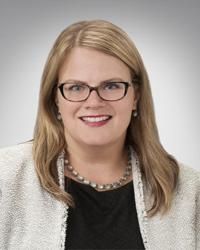
“I think you have a delay to mammogram. I think you have a delay to diagnostic mammogram and ultrasound. You have a delay to biopsy, you have a delay to breast MRI,” she stated. “You have a delay to the surgeon. You have a delay to the medical oncologist. Each one of those steps along the way has a delay.”
Regarding genomic testing, multigene assays such as Oncotype DX and MammaPrint are widely used for early-stage prognostication.1,2 Clinicians also noted the utility of the Magee equation as an evidence-based tool to support assay decisions. Not a single formula, the Magee equation requires inputting several breast cancer variables to predict how a patient’s disease might respond to chemotherapy, as well as their recurrence risk.3 For metastatic disease, circulating tumor DNA holds immense potential for monitoring progression and if there is a need to switch therapies based on the presence of certain mutations—although cost and debatable optimal testing frequency present challenges.
Logistical burdens, especially related to gaining access to oral oncology agents, also remain problematic. Danielle Roman, PharmD, BCOP, oncology clinical pharmacy specialist and manager for the clinical pharmacy team in oncology, AHN, highlighted the administrative strain, an arduous process much in the news lately.4
"All of our high-cost prescription drugs are requiring prior authorization. That is certainly a challenge,” she explained. “It's adding to the time to get medications. Prior authorizations are something we’re seeing very routinely.” The introduction of step therapy requirements, or requiring that treatment start with a certain medication, Roman explained, which sometimes favors a medication with a higher toxicity profile, also complicates treatment decisions.
To address these multifaceted gaps, collaboration is crucial and needed. Improving community screening events and advertising that screening mammograms are generally covered for free are necessary action items, the panel concurred, as is formulating strategies to mitigate diagnosis-related delays, formalizing patient navigation services, and reserving dedicated MRI slots for newly diagnosed patients.
Brufsky concluded that the way forward requires integration across disciplines: "It’s good to have a partnership with the provider, the payers, as well as the pharma companies together. I think that’s when things work best. I think that's a really important takeaway in the breast field for everybody.”
Precision Medicine in Value-Based Care
Precision medicine has fundamentally transformed oncology, shifting treatment paradigms from generalized chemotherapy to biomarker-directed, targeted therapy. Across the evening’s third discussion, “The Impact of Precision Medicine in Value-Based Care,” the panelists underscored the revolutionary success of this approach, particularly in select tumor types.
Julia Foldi, MD, PhD, noted the profound change in HER2-positive breast cancer, stating, "We are curing some of our stage IV patients, and so that has really changed the survival and outcome for these patients.” Foldi is an assistant professor of medicine at UPMC and a breast medical oncologist at Magee-Womens Hospital.

Bhavana (Tina) Bhatnagar, DO | Image Credit: © West Virginia University Cancer Institute at Wheeling Hospital

Similarly, precision oncology has been "life-changing” in hematologic malignancies, most notably in chronic myeloid leukemia (CML), where targeted tyrosine kinase inhibitors have restored normal life expectancy, highlighted Bhavana (Tina) Bhatnagar, DO, director of hematology and medical oncology at the West Virginia University (WVU) Cancer Institute at Wheeling Hospital. “Over a very limited period of time, the treatment armamentarium has expanded considerably, particularly, I think, in the myeloid malignancy space,” she said, “where most of us, we are able to offer oral targeted therapies for many of our patients.”
Despite these successes, significant gaps persist. For one, many solid tumors remain largely without effective targeted options. Bhatnagar outlined an aspirational goal for all cancers, noting: "I think CML is really the best example. Honestly, we'd like to see that across every cancer type, where you find a pill that takes care of the cancer, patients have limited toxicities, or at least, have a better quality of life than what they do on intensive chemotherapy, and they are able to live a normal lifespan.”
Accessibility to advanced genomic testing also remains a challenge, especially outside of academic centers, particularly in oncology deserts in rural areas. Anna Koget, DO, assistant professor of medicine, Drexel University, and hematologist/oncologist, emphasized this gap. "I think one of the things that we could improve on is the use of precision medicine outside of the setting of academic centers in the community.”
Hope to bridge this precision medicine gap is evident in the integration of AI in diagnostic algorithms, such as next-generation sequencing panels and recurrence scoring. Koget cautioned, however, although AI offers potential for improved treatment planning and interpretation of complex genomic data, extensive clinical validation and careful integration into electronic health records are paramount to maintain physician credibility.


C. Bernie Good, MD, MPH | Image Credit: © UPMC Health Plan Insurance Division

C. Bernie Good, MD, MPH, senior medical director, UPMC Health Plan Insurance Division, and panel moderator, noted the patient expectation. "I think all of us here, if we were so unfortunate to be given a diagnosis of cancer, we would want access to the care that would provide the best outcomes, would have the greatest effectiveness, driven by efficacy and clinical trials. We’d also want medications that we could tolerate, and thankfully, that’s the promise and potential of precision medicine.”
Still, achieving equitable care requires addressing systematic disparities, including the underrepresentation of diverse populations in clinical trials and potentially biased algorithms, the panel noted. This lack of generalizability is compounded by the fact that trial inclusion criteria often exclude real-world patients, or include “the best and most fittest patients,” noted Bhatnagar. Future efforts must focus on redesigning trials to be more inclusive of patients with comorbidities and actively engaging community sites to bridge these gaps and ensure precision medicine delivers on its full promise.
Cancer Care in Rural Settings
The evening’s final panel set its sights on technology innovations for rural cancer care, highlighting significant challenges to patient access, continuity of supportive services, and clinical trial participation in rural settings, in “Innovations in Technology to Deliver Cancer Care in Rural Settings.”
"I think access to care has to be No. 1 there. Getting patients out of rural settings into a health care setting is often a challenge on top of that,” said Justin Julius, PharmD, manager of oncology clinical pharmacy services, AHN. “National Comprehensive Cancer Network always recommends getting help or referring to a specialist. But when you work in a rural setting, those specialists are often unavailable, leaving your general medical oncologists, your community oncologists, even primary care providers, to do a lot for each patient.”
Addressing this issue of wearing multiple hats, of the strain placed on community care providers, requires systemic commitment and leveraging technology to bring expertise closer to the patients. To accomplish this, the panelists agreed that telehealth is crucial for minimizing rural patients’ often lengthy travel requirements.

Krista Pfaendler, MD, MPH, FACOG, FACS | Image Credit: © Mary Babb Randolph Cancer Center at West Virginia University
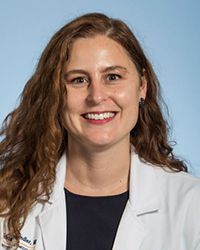
Krista Pfaendler, MD, MPH, FACOG, FACS, medical director of quality and performance improvement, Mary Babb Randolph Cancer Center, WVU, underscored this necessity. “It is unnecessary for them to navigate mountainous roads in a winter snowstorm and risk their lives on dangerous roads just to come in and have a conversation that we could do via video visit.” However, telehealth success is currently hampered by unstable reimbursement policies and a lack of ubiquitous high-speed internet.
“I certainly hope we'll continue to have that supported for reimbursement,” Pfaendler emphasized. “But that being said, some of our patients are in areas where they don't have internet at home or sometimes their phone service is not great where they live.”
Proposed solutions include hybrid models carried out through satellite sites, such as a UPMC Veteran’s Affairs–style hub-and-spoke tele-oncology model, where a patient visits a local clinic equipped with a nurse or an infusion pharmacist to connect remotely with a specialist at a tertiary care center, explained Manisha Bhattacharya, MD, medical oncologist and assistant professor, UPMC, and core faculty, Center for Health Equity Research and Promotion, Veteran's Affairs.

Charles Flach | Image Credit: © UPMC Hillman Cancer Center
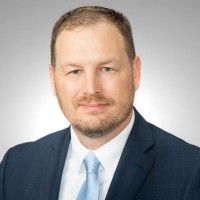
Panel moderator Charles Flach, vice president of oncology operations and chief financial officer, UPMC Hillman Cancer Center, sought to understand these barriers, asking, “Has remote monitoring advanced enough that it can be a reliable source of patient care? Is there support from an innovation perspective, from a rural perspective, from insurance companies? Are there insurer-driven opportunities for rural health?”
Additional proposed solutions include expanding expert consultations and virtual tumor boards, modifying clinical trial protocols, broadening performance status criteria, and permitting local labs/imaging to increase rural participation. Again, AI is anticipated to be transformative.
Bhattacharya predicted, "I think that the clinician toolbox, in terms of how to keep up with new advances when you're running a community oncology practice, that's the first area where you're going to see benefits of AI.”
Ultimately, technology must be used to reduce clinician administrative burden and free up time for high-value patient interactions. Decision-support tools, such as OpenEvidence—which can write home care instructions or calculate a risk score5— can help community practitioners stay current with evolving evidence. There is also AI scribe software, Pfaendler explained, which provides patient-friendly after-visit summaries to improve health literacy, and AI-driven triage tools for after-hours supportive care.
References
- Oncotype DX breast recurrence score test. Exact Sciences. Accessed November 20, 2025. https://www.exactsciences.com/cancer-testing/oncotype-dx-breast-recurrence-score-invasive-ductal
- MammaPrint–breast cancer testing. Agendia. Accessed November 20, 2025. https://agendia.com/mammaprint/
- Magee equations for estimating Oncotype DX recurrence score. University of Pittsburgh Department of Pathology. Accessed November 20, 2025. https://path.upmc.edu/onlineTools/mageeequations.html
- Shaw M, Roman D. Pharmacy is essential to navigating breast cancer treatment: Danielle Roman, PharmD, BCOP. AJMC®. November 18, 2025. Accessed November 20, 2025. https://www.ajmc.com/view/pharmacy-is-essential-to-navigating-breast-cancer-treatment-danielle-roman-pharmd-bcop
- OpenEvidence. Accessed November 20, 2025. https://www.openevidence.com/