

- Center on Health Equity & Access
- Clinical
- Health Care Cost
- Health Care Delivery
- Insurance
- Policy
- Technology
- Value-Based Care
As Cancer Caregiving Becomes More Complex, Start-up Offers Solution to Demographic Cliff
The need for at-home caregivers in cancer care is not new. But as therapies improve, the need to care for patients with cancer stretches over longer periods. Today, the rise of advanced cellular therapies asks more of caregivers. One caregiver who has lived it is working on a better solution for other families.
Neal K. Shah has seen the reality of caregiving up close.
Through his 20s, while building a career as a hedge fund manager, Shah saw his mother take time off when his grandfather developed dementia and kidney failure. Then, in his 30s, after starting a fund that grew from $10 million to $250 million, Shah was the one taking leave when his wife developed cancer.
Shah had helped his mother care for his grandfather, but when his wife became ill, the intensity of caregiving reached a different level.
“It was a multiyear journey,” he said in a lengthy interview with The American Journal of Managed Care® (AJMC®). “There were several hospitalizations, with ICU [intensive care unit] stays. I kept taking sabbaticals from my work. We had to go around the country to different cancer hospitals to seek alternative therapies.


Neal K. Shah | Image: CareYaya
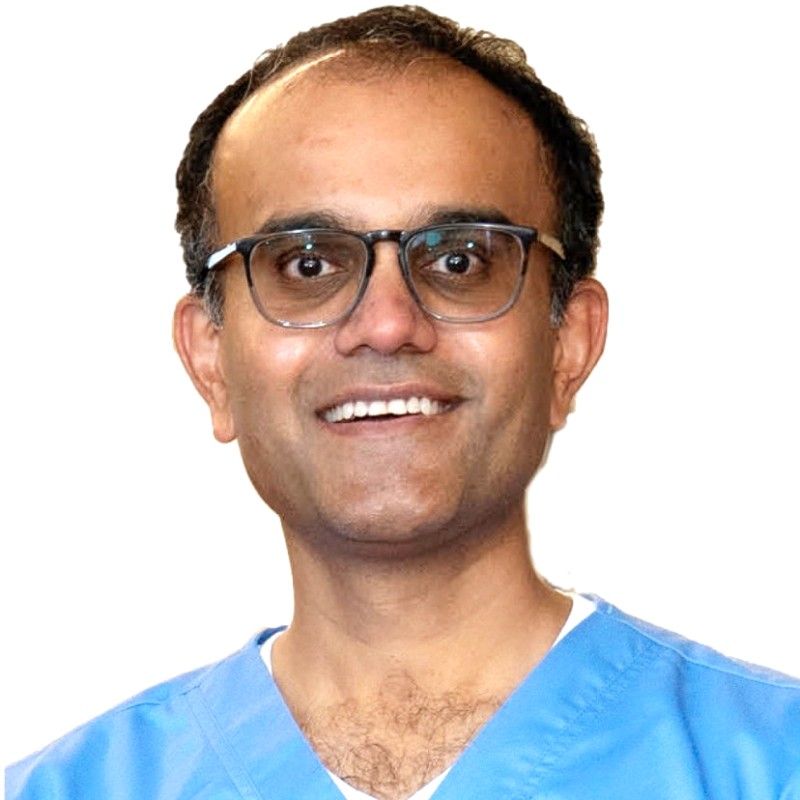
“Ultimately, I ended up shutting down my fund, becoming a full-time caregiver for a couple of years, because I thought that would have a big impact on [her] outcome,” he said. Shah’s wife has now been in remission for several years.
Building on these experiences, Shah cofounded CareYaya Health Technologies, an artificial intelligence (AI)–powered start-up that launched in North Carolina’s Research Triangle region by tapping an underused workforce: students in health care fields, who have a natural interest in caregiving but need flexibility not offered in traditional paid settings.1
Shah can readily quote statistics on the nation’s looming caregiving crisis, as the needs of America’s senior population come up against a demographic brick wall: There are 10,000 baby boomers who turn 80 each day,2 he says, while the pool of 59 million family caregivers—most of them unpaid—is rapidly shrinking.3
Thanks to his work with AARP, Shah fixates on the “caregiver support ratio,” which measures the fact that families have fewer children than they once did.3 Where there were once 6 or 7 persons aged 45 to 64 years to care for every person over age 80, “in this decade, it collapses to 3:1,” he said. That’s before factoring in how far many adult children live from their parents.
CareYaya—the company says yaya is a word for caregiver in Swahili and Thai—is just one of the solutions that is emerging to fill the void.1 Technology, including AI-powered remote monitoring, also promises to fill gaps for families, catching signs of trouble before infections from cancer treatment land patients in the hospital.4
In January, CareYaya was among a dozen companies named to the third CancerX Accelerator Cohort for “developing solutions to help transform how cancer is prevented, diagnosed, and treated.” CancerX looks for innovations poised to “deliver real-world impact.”5
What’s clear, Shah said, is that the stereotype of assuming a wife or daughter is available or will quit her job to care for an aging parent are over. Today, more than 40% of unpaid caregivers are men,3 and the economy typically calls on both spouses to work; if one takes an extended break for caregiving, that person often cannot recover professionally. “I’ve talked to so many people, and I observe that people are drowning in this,” Shah explains.
The need for at-home caregivers in cancer care is not new. But as therapies improve, the need to care for patients with cancer stretches over longer periods. A 2025 report from AARP and the National Alliance for Caregiving found dementia and cognitive decline drive most caregiving needs among older Americans, but it found cancer caregiving is rising, too.3 New data from the American Cancer Society show average survival following diagnosis is now 7 years, with increasingly complex care given at home.6
This is due to the rise of advanced cellular therapy and bispecific antibodies, which call on caregivers to watch for signs of adverse effects (AEs), such as cytokine release syndrome (CRS) or immune effector cell–associated neurotoxicity syndrome (ICANS). Recent papers outlining how to bring administration of bispecifics to the outpatient setting—even the initial “step-up” doses—emphasize the need to identify able caregivers and educate them on their role. 7-11
“Patients and caregivers should have a comprehensive understanding of the benefits, risks, and expectations of [bispecific antibody] therapy to ensure a positive experience. They must understand AE symptoms to look out for, what to do in case of an AE, and how to use the at-home monitoring equipment,” Garfall et al wrote in a 2025 article on implementing outpatient bispecific administration in multiple myeloma.7 “Patient advisory groups can provide additional education and resources, and digital tools may facilitate appointment booking and AE monitoring and reporting.”
More Patients To Be Eligible for Therapies Requiring Caregivers
Demand for caregivers to help patients through the early days after receiving a novel cancer therapy will multiply over the next few years, as forecasts predict enormous growth in the chimeric antigen receptor (CAR) T-cell therapy market through 2034.12-13 Eligibility for bispecific antibodies is poised to explode, with more than 300 products in development and existing therapies moving into earlier lines of care.13,14
Academic health systems and community practices are working collaboratively to bring both CAR T-cell therapy and bispecifics into settings closer to patients, with bispecifics in particular moving rapidly into outpatient administration, both to expand access and to achieve savings.15-19 As Olivieri and Banerjee made clear in an editorial accompanying a Mayo Clinic study, inpatient administration of the bispecific teclistamab is a money-loser for hospitals, so the faster health systems move this process to the outpatient setting, the better.19 That will make family caregivers—and more of them—essential. Mayo Clinic studies show that step-up doses can be completed in an outpatient clinic in under an hour, including monitoring; maintenance doses are completed in less than 30 minutes.16
In December 2025, at the 67th American Society of Hematology (ASH) Annual Meeting and Exposition, multiple presentations suggested that bispecifics will be moving into earlier lines of care sooner rather than later.15 In the weeks that followed, health care leaders who spoke with AJMC said they are already concerned about capacity, because when patients have no caregiver, bispecifics must be administered in the hospital, and at a loss.19,20
Caregiving needs will be a factor in therapy selection. According to a 2024 study, Hydren et al found that 61% of patients “were least willing to add more burden to their caregivers.”9 The needs associated with CAR T-cell therapy administration are most intense, with a caregiver required 24/7 for 4 to 8 weeks.21 Caregiving needs with bispecific administration are less intense and highly focused in the step-up phase, which takes 1 to 3 weeks; if patients receive therapy on an outpatient basis, closest monitoring is needed for the first 48 hours.22
What are caregivers doing? They monitor vital signs and symptoms, looking for signs of CRS—such as fever, chills, or nausea—or ICANS, such as changes in speech or behavior or confusion. The caregiver will be in contact with the patient’s care team and may have to drive the patient to the emergency department (ED). Both CRS and ICANS are reversible, but failure to address them quickly can result in permanent organ damage or persistent risk of infection (CRS), or cognitive damage, parkinsonism, motor deficits, or other damage (ICANS).
Although the intensity of caregiving with bispecifics may ease after the step-up phase, it does not cease. A group of oncology pharmacists led by Zahra Mahmoudjafari, PharmD, MBA, BCOP, FHOPA, writes that time demands on caregivers following bispecific administration can be consequential. “Consideration should also be given to the caregiver and their potential expenses and loss of income,” they write. “There continues to be a lack of transparency in what these out-of-pocket costs can be.”10
Brooke Adams, PharmD, BCOP, clinical pharmacist for stem cell transplant and cellular therapy at Orlando Health, alluded to what’s coming when she chaired a panel discussion on bispecifics in multiple myeloma during AJMC’s Institute for Value-Based Medicine® in December 2025. Asked whether finding caregivers is already a challenge, Adams said some patients who receive bispecifics must have caregivers come in shifts, even for just a few hours at a time.
Yet the promise of what bispecifics offer means these challenges must be addressed. In closing her panel, Adams said, “Buckle up; it’s about to get more exciting.”
From “Obsession” With Caregiving Gaps, an Idea Emerges
Experiments with paid caregivers following bispecifics or CAR T-cell therapy are under way,Olalekan Oluwole, MBBS, MD, associate professor of medicine in hematology/oncology at Vanderbilt University Medical Center, told AJMC during an interview at ASH. He was presenting data that compared clinical outcomes for patients receiving CAR T-cell therapy at authorized treatment centers, which began offering CAR T around 2023 as an alternative to academic centers. Data showed the alternate sites did a good job, Oluwole said.23
The goal, of course, is to increase patient access, and that raises the issue of caregiving. Oluwole has encountered situations in which patients end up in the hospital due to lack of a caregiver.
Of course, he said, physicians make that call if necessary. “But it is just an unnecessary use of resources,” Oluwole said. “There is a growing trend to use paid caregivers. It’s kind of new, and maybe that will fill the gap, at least in the areas where a reliable caregiver can be available.”
A reliable caregiver. That’s the challenge Shah encountered during his own odyssey, when he became “obsessed” with dysfunction in the care industry. He was experiencing the flaws of a service that many families needed, for which demand would only grow. “I was like, ‘there’s got to be opportunity here for innovation.’ ” Even for a family that could afford help, “the quality was so unreliable.”
He started with the math: If a family worked through an agency, care cost about $35 an hour, but the caregiver typically received about half that amount. This explained the uneven quality: the person providing care often had to work 2 or 3 jobs to make ends meet.
Shah took part in support groups and heard from others who needed care for older or sick relatives. Many felt badly about handing their loved ones off to paid caregivers. When they fear the care is subpar, the guilt multiplies.
“There is affordable respite care that is actually good enough quality that you don’t feel guilty,” Shah said. “Most people intuitively, if it happens with family members, you feel, ‘I should be doing this myself.’ But then you have a job, you have to earn income. You might not even live in the same place.”
Shah’s mother, for example, loved her job, but eventually became so frustrated by the inconsistent quality of care that she quit to care for her father full time. It proved to be the end of her career; by the time her father passed, she was in her late 50s and “basically unhireable,” Shah said.
Amid the feelings of helplessness, Shah said he found one type of caregiver that families consistently praised: health care students, such as those in nursing or premedical programs. Families would learn about student caregivers by word of mouth, or professors would post that a student needed a job.
A Flexible Solution for Symptom, Medication Monitoring
Shah’s efforts to hold down costs mean CareYaya will not replace family caregiving in cancer care. But it could offer respite for families tasked with symptom or medication monitoring. Shah explains:
- CareYaya connects families with the student workforce, focusing on those seeking health care careers who need flexible, part-time employment. Health care students in most locations are paid $15 to $20 per hour, Shah said, and they gain experience that many put on their resumes.
- By limiting the scope of caregiving services—no bathing or administering intravenous drugs, for example—CareYaya avoids many regulatory and licensing costs, keeping care affordable. Reminding clients to take their medication is OK, and so is taking someone’s temperature, Shah said. (He notes that many tasks that involve expensive requirements are performed by families every day for free.)
- CareYaya promotes its students as “digital natives” who can assist clients with technology, such as a check-in via telehealth. Shah confirms that CareYaya companions can ensure that digital monitoring systems are functioning, so that vital data are sent to care teams to catch any early signs of CRS following administration of cancer therapy.
- CareYaya companions cannot drive to the ED, but they can order a rideshare and travel with the client, Shah said in an email.
- CareYaya does background checks and vetting, but scheduling is handled through AI technology—similar to Uber. This keeps overhead low while allowing CareYaya to offer a fair wage to student caregivers and sparing families hours of hunting for help.
Shah’s research among the students in the health care professions at Duke University, the University of North Carolina (UNC) at Chapel Hill, and North Carolina State University revealed that most worked in restaurants or retail, or they drove for DoorDash or a similar service. “We found that there was a big desire among the students [for] flexible hours,” but they could not find this in the fields they were pursuing.
The concept of CareYaya, Shah said, was to redirect “all the UNC Chapel Hill nursing students who are doing DoorDash [into] creating a DoorDash-like experience, but you are doing caregiving. Everybody would sign up for that.”
Shah found that families who couldn’t afford agency rates spent hours scouring online ads or working personal connections. “Two-thirds of the care economy goes through this gray market, where people are on their own finding it,” he said. Thus, Shah's concept is straightforward: make care affordable and easy to access.
CareYaya now operates near universities in 10 states plus Washington, DC, and has funding from multiple universities and health systems, as well as the National Institutes of Health.1
Shah sees CareYaya as disrupting the status quo on multiple levels. “It’s better-quality care at more affordable rates, and it’s a massive workforce expansion, because you’re bringing in this workforce that the traditional care economy doesn’t want,” he said. “But these are people who would love to do the work—and, I think, thrive in it.”
References
- CareYaya. Accessed January 12, 2026. https://www.careyaya.org/
- Orlov L. AARP 2026 tech trends: what a difference a decade makes. Aging and Health Technology Watch. December 11, 2025. Accessed January 26, 2026. https://www.ageinplacetech.com/blog/aarp-2026-tech-trends-what-difference-decade-makes
- AARP and the National Alliance for Caregiving. Caregiving in the US 2025. July 24, 2025. Accessed January 12, 2026. https://www.aarp.org/pri/topics/ltss/family-caregiving/caregiving-in-the-us-2025/
- Caffrey M. Canopy’s remote therapeutic monitoring cuts infection-related hospitalizations by half in patients with blood cancers. Am J Manag Care. 2026;32(Spec 01):SP50.
- CancerX unveils next accelerator cohort driving breakthroughs in cancer care. News release. CancerX. January 12, 2026. Accessed February 2, 2026. https://cancerx.health/accelerator-2026-cohort
- Siegel RL, Kratzer TB, Wagle NS, Sung H, Jemal A. Cancer statistics, 2026. CA Cancer J Clin. 2026;76(1):e70043. doi:10.3322/caac.70043
- Garfall AL, Banerjee R, Frenzel L, et al. A roadmap to implementing outpatient administration of bispecific antibodies in multiple myeloma. Front Oncol. 2025;15:1630146. doi:10.3389/fonc.2025.1630146
- Donnellan W, Lin SW, Abbas J, et al. Operationalization and use of bispecific T-cell–engaging antibodies in community practices: multidisciplinary perspectives on developing logistics and workflow for cytokine release syndrome management. J Adv Pract Oncol. Published online June 25, 2025. doi:10.6004/jadpro.2025.16.7.19
- Hydren JR, Lin D, Sweeney NW, et al. Patient perspectives on BCMA-targeted therapies for multiple myeloma: a survey conducted in a patient advocacy group. Front Health Serv. 2024;4:1354760. doi:10.3389/frhs.2024.1354760
- Mahmoudjafari Z, Ali A, Davis J, Sandahl T, Nachar V, Mancini R. Seamless navigation of bispecific therapies: optimizing management and outpatient access with a focus on coordination. J Adv Pract Oncol. Published online September 11, 2024. doi:10.6004/jadpro.2024.15.8.15
- Rios-Olais FA, Hilal T. Estimation of benefit to bispecific antibodies in US patients with lymphoma and multiple myeloma. Blood Adv. 2025;9(18):4673-4675. doi:10.1182/bloodadvances.2025016176
- North American CAR T-cell therapy market outlook through 2030. Ken Research. November 2024. Accessed January 26, 2026. https://www.kenresearch.com/industry-reports/north-america-car-t-cell-therapy-market
- CAR T-cell therapy market size and growth 2025 to 2034. Nova One Advisor. December 2025. Accessed January 26, 2026. https://www.novaoneadvisor.com/report/car-t-cell-therapy-market
- Bispecific antibodies market set to surge to $163.15 billion by 2032, driven by a robust 40.1% CAGR. Yahoo Finance. July 22, 2025. Accessed January 26, 2026. https://finance.yahoo.com/news/bispecific-antibodies-market-set-surge-072000581.html
- Caffrey M. Bispecifics in new combos, new uses, and earlier lines of treatment in myeloma. Am J Manag Care. 2026;32(Spec 01):SP32.
- Sandahl TB, Soefje SA, Fonseca R, et al. Real-world safety and health care resource utilization of teclistamab under an outpatient model for step-up dosing administration. JCO Oncol Pract. 2025;21(5):702-709. doi:10.1200/OP-24-00489
- Soefje S, Sandahl T, Fonseca R, et al. Outpatient step-up dosing and safety with talquetamab: a real-world Mayo Clinic study. Presented at: European Hematology Association 2025 Congress; June 12-15, 2025; Milan, Italy. Poster S1764. https://bit.ly/4qK7XK3
- Flinn R. Banner year for bispecifics as therapies advance into the community setting. Am J Manag Care. 2025;31(Spec 02):SP107-SP108.
- Olivieri DJ, Banerjee R. Impatient for outpatient: operationalizing bispecific antibodies for multiple myeloma in the ambulatory setting. JCO Oncol Pract. 2025;21(5):596-598. doi:10.1200/OP-24-00921
- Overcoming pain points to advance bispecifics in the community for patients with myeloma. Am J Manag Care. 2026;32(Spec 01):SP63.
- Caregiving for CAR T-cell therapy: a worksheet for caregivers. Cancer Support Community. December 2023. Accessed January 26, 2026. https://www.cancersupportcommunity.org/sites/default/files/fsac/Caregiving_for_CAR_T_Cell_Therapy.pdf
- Grajales-Cruz A. Ning K. Navigating transitions of care with a bispecific antibody in relapsed or refractory multiple myeloma. OncLive. January 22, 2025. Accessed January 26, 2026. https://www.onclive.com/view/navigating-transitions-of-care-with-a-bispecific-antibody-in-relapsed-or-refractory-multiple-myeloma
- Caffrey M. Early data show promising outcomes as CAR T-cell therapy expands beyond academic centers. Am J Manag Care. 2026;32(Spec 01):SP52.


Frameworks for Advancing Health Equity: Pharmacy Support for Non-Hodgkin Lymphoma
December 19th 2024Rachael Drake, pharmacy technician coordinator, University of Kansas Health System, explains how her team collaborates with insurance companies and providers to support treatment access for patients with non-Hodgkin lymphoma.
Listen

What Would Make Therapy Last? How About 2 Targets Each on B Cells and T Cells?
January 10th 2026The Chief Medical Officer of ModeX Therapeutics discusses MDX2003, a groundbreaking tetraspecific therapy that promises enhanced efficacy and safety in non-Hodgkin lymphoma treatment. This exchange appears in the January issue of Evidence-Based Oncology, the annual recap of the meeting of the American Society of Hematology.
Read More

Fixed-Duration Epcoritamab Shows Strong Responses in Older, Chemo-Ineligible Patients With LBCL
December 27th 2025In the EPCORE DLBCL-3 study, fixed-duration epcoritamab monotherapy delivered deep, durable responses with manageable toxicity in older, chemotherapy-ineligible patients with LBCL.
Read More


