

- Center on Health Equity & Access
- Clinical
- Health Care Cost
- Health Care Delivery
- Insurance
- Policy
- Technology
- Value-Based Care
Dexamethasone Before R-CHOP in DLBCL With GI Involvement Can Limit Complications, Retain Efficacy
Dexamethasone pretreatment significantly reduces GI complications in DLBCL patients undergoing R-CHOP, maintaining efficacy and improving safety.
Patients who have diffuse large B-cell lymphoma (DLBCL) with gastrointestinal (GI) complications can be pretreated with dexamethasone before receiving a standard immunochemotherapy regimen, which can limit known GI risks without compromising therapeutic efficacy, results of a small study show.1


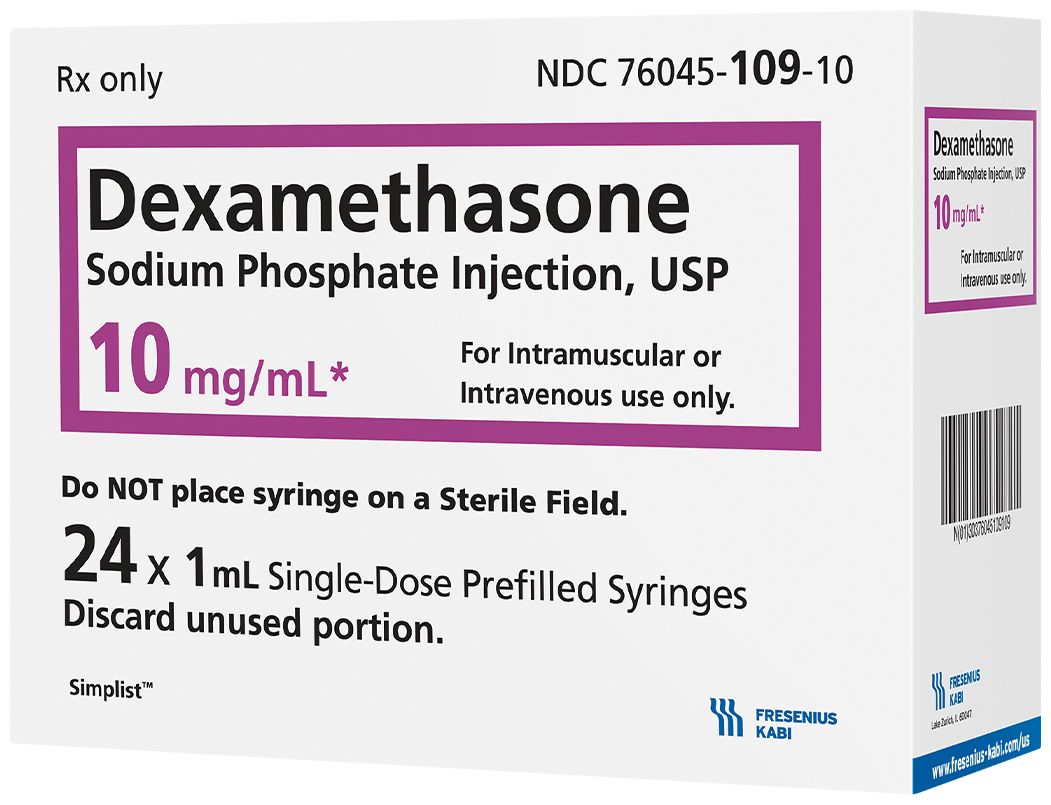
Dexamethasone | Image: Fresenius Kabi
Results from authors at Jiaotong University School of Medicine in Shanghai, China, were published this week in Annals of Hematology. This subtype of DLBCL is relatively common in China, accounting for 53% to 58% of such cases, a notably higher incidence compared with Western populations.2
The standard treatment for newly diagnosed DLBCL is known as R-CHOP; it is normally comprised of rituximab plus cyclophosphamide, doxorubicin, vincristine, and prednisone.
Where there is a presence GI involvement, the authors note, the normal regimen creates a risk of severe complications, such as perforation and acute hemorrhage.1
The study retrospectively analyzed 65 patients with DLBCL who had GI involvement. In the first group of 33 patients, a prephase of dexamethasone was given, followed by a fractionated regimen of R-CHOP, with cyclophosphamide, doxorubicin, and vincristine split on days 1 and 4) in cycle 1, and then transitioned to standard R-CHOP from cycle 2 onwards.
The second group of 32 patients received 6 cycles of standard R-CHOP without pretreatment.
Both dexamethasone and prednisone are synthetic corticosteroids that reduce inflammation and suppress the immune system, although dexamethasone is longer-acting and more powerful.3 Both are used to managed side effects in cancer treatment.
The authors reported that there were no treatment-related GI perforation or acute hemorrhage occurred in the first group, compared with 18.7% incidence of 18.7% in the second group (P = .03). Study authors reported no significant differences in overall response rate (84.9% vs 82.7%), 5-year progression-free survival (73.0% vs 68.1%; P = 0.62), or 5-year overall survival (83.7% vs. 78.0%; P = 0.58). Hematologic toxicities were comparable between groups, and no treatment-related deaths occurred in the first group.
“A prephase of dexamethasone followed by fractionated R-CHOP in the first cycle, before transitioning to standard R-CHOP, significantly reduces the incidence of GI complications while preserving therapeutic efficacy in DLBCL patients with GI involvement,” the authors wrote. “This approach offers a safer induction strategy without compromising survival outcomes.”
The authors say their findings could have applications as therapeutic needs evolve.
“Looking forward, our findings on mitigating early GI toxicity have broader implications for adapting to evolving therapeutic standards,” they write. “Given the emerging superiority of polatuzumab vedotin in combination with R-CHP (Pola-R-CHP) over R-CHOP in patients with non-GCB/ABC subtype DLBCL, it would be of interest to evaluate whether a similar pre-phase strategy could be safely integrated into these modern regimens to reduce early GI toxicity while maintaining efficacy.”
References
- Cui K, Wan J, Li Z, et al. Results from authors at Jiaotong University School of Medicine in Shanghai, China, were published this week in Annals of Hematology. 2026;105:56. doi: 10.1007/s00277-026-06824-5
- Ding W, Zhao S, Wang J, et al. Gastrointestinal lymphoma in Southwest China: subtype distribution of 1010 cases using the WHO (2008) classification in a single institution. Acta Haematol. 2016;135(1):21-8. doi: 10.1159/000437130.
- Weiser P. Dexamethasone vs. prednisone: similarities & differences. VeryWell Health. October 27, 2025. Accessed January 25. 2026. https://www.verywellhealth.com/dexamethasone-vs-prednisone-similarities-and-differences-7968370


Specialty and Operator Status Influence Electronic Health Record Use Variation
January 22nd 2026Operators demonstrated specialty-specific differences in electronic health record efficiency, timeliness, and after-hours use, highlighting how workflow and training shape documentation behaviors across medical disciplines.
Read More

