

- Center on Health Equity & Access
- Clinical
- Health Care Cost
- Health Care Delivery
- Insurance
- Policy
- Technology
- Value-Based Care
Smart Speaker Improves Mental Health, A1C in Older Adults With Diabetes
A randomized clinical trial found a voice-enabled virtual assistant reduced mental distress and improved quality of life, self-care, and glycemic control.
An interactive smart speaker programmed with a behavioral intervention model significantly improved mental health and diabetes-related outcomes among older adults with type 2 diabetes, according to one study.1


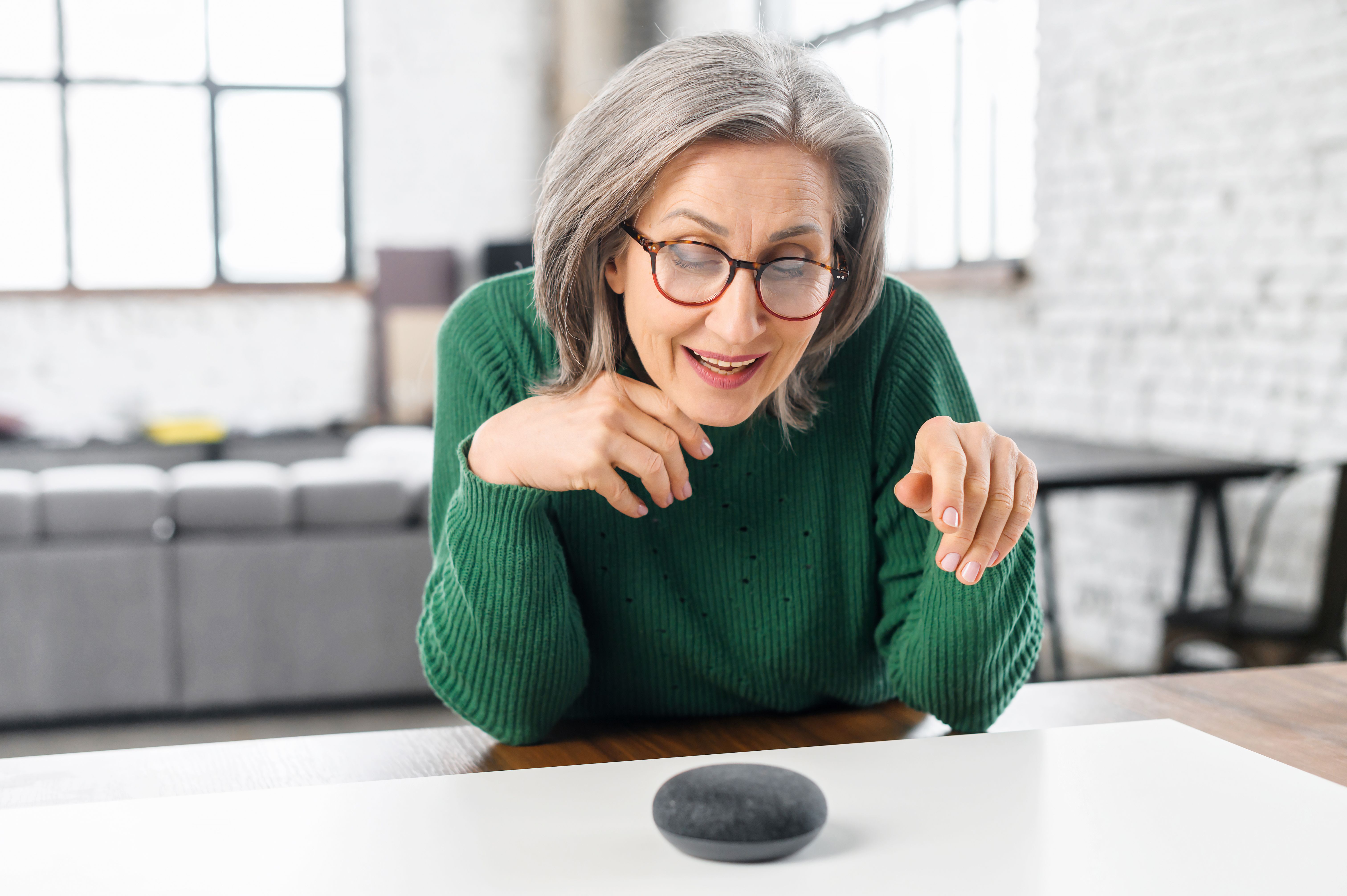
Participants who used the virtual assistant experienced lower levels of mental distress compared with those receiving usual care, alongside gains in quality of life, adherence to diabetes self-care behaviors, and glycemic control.
This randomized clinical trial is published in JAMA Network Open.
“After 12 weeks, participants in the smart speaker group showed significant improvements in mental distress, with a reduction of −1.46 points on the SRQ [Self-Reporting Questionnaire]-20 scale,” wrote the researchers of the study. “The intervention was also associated with enhanced quality of life, better adherence to diabetes self-care behaviors, and improved glycemic control, although the impact on secondary outcomes should be interpreted as exploratory given the absence of multiplicity adjustment.”
In older adults with type 2 diabetes, mental stress and depressive symptoms are highly prevalent and closely intertwined with disease management and outcomes, according to a previous study that found that about 60% of middle‑aged and elderly individuals with type 2 diabetes experienced depressive symptoms—far higher than in age‑matched controls without diabetes—which negatively impacted glucose metabolism and was linked to poorer blood glucose control.
The new study was conducted at an academic medical center in Brazil between June 22, 2023, and February 8, 2024, enrolling adults 65 years or older with type 2 diabetes. Participants were randomized in a 1:1 ratio to receive either usual care or a home-based interactive virtual assistant intervention using a Smart Speaker Echo Dot for 12 weeks. The device was programmed with a behavioral intervention model designed to support mental health and diabetes self-management.
Outcomes were assessed at baseline and at 12-week follow-up, with the primary outcome being between-group differences in mental distress measured by the SRQ. Secondary outcomes included quality of life, perceived stress, diabetes self-care behaviors, and glycemic control as measured by hemoglobin A1C.
Analyses were conducted on available outcome data, with adjusted models used to estimate between-group mean differences (MDs).
Among 112 enrolled participants (mean [SD] age, 72.5 [5.7] years; 63.4% women), outcome data were available for 103 individuals at 12 weeks. The intervention significantly reduced mental distress, with a fully adjusted Self-Reporting Questionnaire score of 6.29 (0.44) in the smart speaker group compared with 7.75 (0.42) in the usual care group, yielding a mean difference (MD) of −1.46 (95% CI, −2.73 to −0.19; P = .02).
Participants receiving the intervention also demonstrated improvements in quality of life (MD, 9.46; 95% CI, 3.65-15.26; P = .001), adherence to diabetes self-care behaviors (MD, 3.40; 95% CI, 1.61-5.19; P < .001), and glycemic control, with a reduction in hemoglobin A1C of −0.48% (95% CI, −0.85 to −0.11; P = .01). No significant between-group difference was observed for perceived stress (MD, −3.00; 95% CI, −6.20 to 0.20; P = .07), and no participants withdrew from the study due to adverse events.
However, the researchers recognized several limitations to their research, including the open-label design, which may have introduced bias. The short 12-week follow-up also may have overestimated effect size, and requiring home Wi-Fi may have favored participants more comfortable with technology. Additionally, single-site recruitment in a middle-income country with predominantly low-income, lower-education participants may have limited generalizability.
Despite these limitations, the researchers believe the findings highlight the potential of easily scalable, home-based digital tools to address both psychological well-being and clinical outcomes in an aging population with complex care needs.
“This randomized clinical trial found that an interactive virtual assistant device, built with a behavioral intervention model, improved mental distress among older individuals with type 2 diabetes compared with standard care,” wrote the researchers. “Exploratory analyses also suggested improvements in quality of life, adherence to diabetes-related self-care behaviors, and glycemic control. These findings suggest that this easily implemented self-management intervention could significantly enhance health outcomes in this population.”
References
1. Matzenbacher LS, Ludwig da Costa F, Gomes Boabaid de Barros L. et al. Interactive virtual assistant for health promotion among older adults with type 2 diabetes. JAMA Netw Open. January 23, 2026. Accessed January 22, 2026. https://jamanetwork.com/journals/jamanetworkopen/fullarticle/10.1001/jamanetworkopen.2025.5350
2. Zhang C, Wu Z, Lopez E, et al. Symptoms of depression, perceived social support, and medical coping modes among middle-aged and elderly patients with type 2 diabetes. Front Mol Biosci. 2023;10:1167721. doi:10.3389/fmolb.2023.1167721


Personalized Care Key as Tirzepatide Use Expands Rapidly
April 15th 2025Using commercial insurance claims data and the US launch of tirzepatide as their dividing point, John Ostrominski, MD, Harvard Medical School, and his team studied trends in the use of both glucose-lowering and weight-lowering medications, comparing outcomes between adults with and without type 2 diabetes.
Listen


