

- Center on Health Equity & Access
- Clinical
- Health Care Cost
- Health Care Delivery
- Insurance
- Policy
- Technology
- Value-Based Care
Redesigning Trials for Real-World Patient Complexity: A Q&A With Prerna Mewawalla, MD

Prerna Mewawalla, MD, discusses innovative strategies to enhance cancer care access, reduce clinician burden, and improve clinical trial diversity in real-world settings.
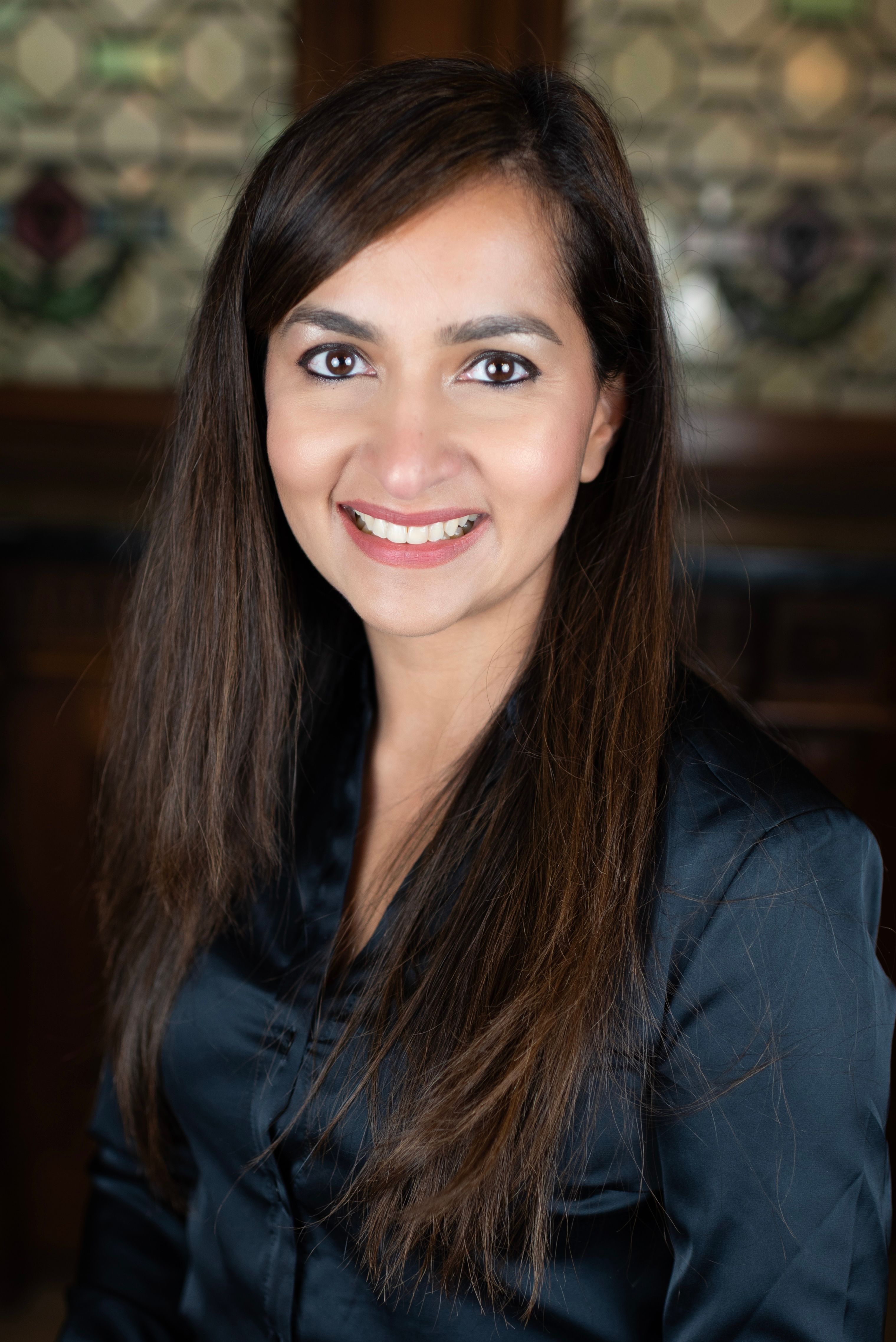
As a hematologist and cellular therapist at Allegheny Health Network and associate professor at Drexel University who specializes in plasma cell disorders, mainly multiple myeloma, amyloidosis, and transplant, Prerna Mewawalla, MD, does clinical and research work focused on plasma cell disorders and expanding access to advanced therapies—for example, bispecifics and chimeric antigen receptor T-cell treatments—to the community. She is also medical director of Allegheny’s apheresis program and leads several institutional initiatives around health equity and clinician wellness.
In this interview, conducted in conjunction with the November 13 Institute for Value-Based Medicine® event "Driving the Future of Cancer Care" held in Pittsburgh, Pennsylvania, she outlines systemic strategies to address clinician burden and geographic barriers to trial participation. She proposes the use of artificial intelligence (AI) software embedded in electronic health records (EHRs) to screen for eligible patients, alleviating the load on community oncologists; advocates for a hybrid model that utilizes research telehealth visits and a satellite subinvestigator approach; and emphasizes that diversity in clinical trials must expand beyond race and ethnicity to include often-excluded populations, such as older patients and those with comorbidities to ensure eligibility criteria reflect real-world complexity. She also stresses that transparency and building trust are vital tools for clinicians to combat misinformation surrounding clinical trials, and that making these necessary systemic changes requires a collective, multidisciplinary effort with leadership buy-in.
This transcript was lightly edited for clarity and conciseness.
AJMC: What systemic and operational strategies are being implemented or do you recommend to reduce clinician burden and overcome geographic and cultural barriers in relation to improving follow-up, enrollment, and outreach to rural and immigrant populations for clinical trials?
Mewawalla: I'll start with the screening part of it. I think, especially with screening programs, they really can't operate in silos. I think the word cancer is very scary and anxiety provoking for a patient. I think if there is a positive screen, it’s so important that that is communicated with the patient by the health care provider. A positive screen does not always mean cancer; it could also sometimes just mean that there is more workup that is needed.
Screening programs can't operate in silos. I think it's so important that something like cancer, that is so scary and anxiety provoking for a patient, be communicated the right way. It's so important that a health care provider communicates that with a patient, either via phone or in person. Most primary care physicians have contacts with oncologists; they know who to call when there's a positive screen. But it's also important to have a dedicated oncology line that is really manned by oncology navigators who are experienced with this, who know which oncologist treats which type of cancer and right from the get-go helps the patient navigate through that journey. Even the time to first visit is so important because from the time the patient hears that they may have cancer, it's so important to just shorten that time until they meet the oncologist and they are reassured or they have answers. That's another thing that is very important.
When it comes to reducing clinician burnout, especially in the community, I think community oncologists are so busy. They have to keep on top of every type of cancer. They get only 15 to 20 minutes to see a patient, and in the middle of all of that, for them to even screen for clinical trials and also address that can sometimes be a lot. I think we need to provide all the support we can in this situation, where we can probably have a hybrid model, where we have centralized coordinators who are supporting multiple sites virtually in the same network to help with that.
Another thing that is very interesting, and I've seen in certain health systems—and I really think it's going to pick up—is AI software, which actually helps screen patients for clinical trials. It's very difficult for a community oncologist to even be aware of, “These other trials for pancreatic cancer... these are the trials for multiple myeloma,” and an AI software could really screen your EHR, whether it's Epic or another EHR, and identify these patients and alert the navigator. The navigator can quickly screen them and identify that this truly is a patient who would qualify, and then alert the oncologist that there is a potential clinical trial for this patient, which would truly take the burden away from the community oncologist.
I think another thing that can also help, which a lot of places have right now, are pathways, where clinical trials, which are available at a network, are embedded in pathways. For example, if I'm choosing [for a patient with] newly diagnosed transplant-ineligible multiple myeloma, it automatically tells me my first option is a clinical trial, that one is available to I want to choose it. That also automatically takes the burden away from the community oncologist trying to figure out if there is a trial available, and what was the trial I heard of at some point.
I think we are using AI to probably less than 5% of its potential currently, but there is so much more we can accomplish. Right now, we are just using it with Abridge or Ambience, for software to transcribe, but it can do so much more than that. Even with research, you could [have] all the Moonshot data that we are collecting across the country, and if you analyze all the patients with a certain cancer, see all the mutations that these patients have. Is there a trend? Is this something in common we are seeing? I think it's going to change the oncology space in so many different ways.


Prerna Mewawalla, MD | Image Credit: © Allegheny Health Network
AJMC: Given the acknowledged negative impact of social media misinformation and the persistent "guinea pig" myth surrounding clinical trials, what methods and messaging strategies are recommended or used by clinicians to build trust, explain modern trial safety/oversight, and communicate the potential direct benefits of participation to patients?
Mewawalla: I think social media is a very, very powerful tool when it's used the right way. Unfortunately, there is a lot on social media that may not be accurate. We all have patients who come to us, and they may or may not tell us that they are on all these supplements. We may not even know which interact with our chemotherapy, which could decrease their efficacy, which could increase their adverse effects as well. I think to combat misinformation, it's so important to build trust with your patient right from the get-go, from the first time you meet the patient, from the time you're communicating their diagnosis, and being very honest with what the path forward looks like, what is the next treatment going to look like, what's their prognosis going to be. I think just being transparent. No amount of information is too much information. Just giving your patients all the information, I think, truly builds trust, and with every meeting, that trust only increases as you go along and see these patients.
Another thing I always tell patients is, and there are some studies which have shown this, patients who are enrolled in clinical trials tend to do better, because of multiple different reasons. Because there's more oversight, there are more people watching them, from nurses to research coordinators to physician visits. All the visits are happening on time. There's probably more lab work that is getting done. These patients sometimes are actually at an advantage. Also, modern trials have a lot more guardrails than what it used to be decades ago, and I think sometimes patients don't recognize that as well. Sometimes we always say that the best way to combat social media is social media. So, should we have more physicians also advocating and giving the right news out there on social media? Maybe it's also doing that part, which I don't think we are very good at as the medical community.
I feel like we should be better at using social media. Maybe we should be on TikTok and promoting the right information, and make it also in a way that's more interesting, not very cookie cutter and boring, where people are like, “Oh, let's just change the channel. This is another medical advertisement or a commercial.” Maybe that's another way to do it.
AJMC: During the panel discussion, you suggested implementing research telehealth visits and a satellite subinvestigator model to help with trial recruitment and enrollment. How can major networks like Allegheny Health Network or UPMC overcome regulatory, facility, or workflow challenges to effectively use such a model to expand clinical trial access for complex treatments into community settings?
Mewawalla: I think this truly requires a hybrid approach. The point isn't to decentralize everything. We don't want everything to go to the community. It’s to decentralize the parts that don't require a tertiary center, and how health systems can truly execute this is probably in 3 parts.
One is the regulatory part of it. We’re creating preapproved satellite credentialing processes for subinvestigators at all these sites, where you could still have the same study, where the principal investigator is located at the main academic site, but having subinvestigators at our satellite sites, with shared standard operating procedures and centralized oversight, and it doesn't have to be reinvented at each site.
The next thing is using existing facilities, using existing infusion centers and community oncology clinics for monitoring and certain labs and also for receiving certain drugs. For example, when it comes to bispecifics, I am able to give bispecifics in the community at all my community sites, but when it comes to a clinical trial, I tell the same patient, “Hey, but you have to travel 2 hours because now you're part of the clinical trial to get the same drug once a week.” If it's something that I can do in the community, a clinical trial, and it's still a satellite spot for us where we actually create it as one of our satellite offices for clinical trials, it would make a big difference.
Third thing is using alternate workflows. One of the good things that came out during the COVID-19 pandemic was telehealth. We all use a lot of telehealth with our patients, but when it comes to research, that's still very restricted. We still require research patients to come in person. They need to come in person for their visits at least once a month. They need to come in person for the consenting process. They need to come in person to meet with the research coordinators. A lot of this can happen via telehealth.
The consenting process can be virtual. The research visits with the research administrative staff can also be virtual, enabling that the research stuff still stays at the academic side and we don't have to have staff at all these different community sites. This is something what would definitely impact getting access to our clinical trials in the community.
AJMC: You also emphasized that defining clinical trial diversity must go beyond race and ethnicity to include populations commonly excluded, such as older patients, those with comorbidities, kidney dysfunction/dialysis, and lower performance status. Beyond metrics like race and ethnicity, how should organizations attempt to broaden clinical trial eligibility criteria and design to ensure they reflect real-world complexity?
Mewawalla: Right now, many clinical trials still create an ideal patient, and an ideal patient is a patient who never really truly walks into our clinics. I also think real-world diversity includes age. We always have exclusions for older patients, where there'll be an age cutoff that patients over a certain age are not enrolled, really decreasing the availability of these newer treatments to them.
People with comorbidities… many of our patients will have kidney disease and diabetes and hypertension and poor performance status, but they're all excluded from clinical trials. The way they can do it, that protocols can be built around comorbidities rather than avoiding them, is trials can actually have subgroups where there are certain patients with renal dysfunction, or a certain amount of patients with poor performance status, or certain prespecified subgroups to avoid this.
If our trials don't reflect these realities, they're not representative, because they could miss side effects which we see in the real world. That's really where real-world studies truly come into play as well. When we do real-world studies and analyze these patients after the drug has been approved, there are adverse effects that we find, which we may not have found during the clinical trial period.
The other thing that having these exclusion criteria does is limit the patients from rural vs urban areas where patients with rural of these trials.
I truly think diversity is about including patients with age, comorbidities, depending on where you're from, different socioeconomic status, all of that is important when it comes to diversity in clinical trials.
These conversations cannot happen in isolation, in an individual department. This truly requires a multidisciplinary approach, with physicians, with research staff, with pharmacists, with advanced practice providers, with administration, with leadership buy-in to make changes like this happen. We can't fix systemic issues alone; it truly takes a collective effort.


