

- Center on Health Equity & Access
- Clinical
- Health Care Cost
- Health Care Delivery
- Insurance
- Policy
- Technology
- Value-Based Care
Oral Vinorelbine Plus Concurrent Radiotherapy Show Promising Results in Unresectable NSCLC
Patients with unresectable stage III non–small cell lung cancer (NSCLC) had previously received neoadjuvant chemoimmunotherapy.
A combination of oral vinorelbine plus concurrent radiotherapy (RT) had promising antitumor efficacy in patients with unresectable stage III non–small cell lung cancer (NSCLC) who had previously received neoadjuvant chemoimmunotherapy (NACIT) and were not eligible for intravenous chemotherapy concurrently with RT, according to a new study.1 This result offers options for patients who need alternative methods of treatment.
Patients with NSCLC have seen improvements in treatment through the use of neoadjuvant chemotherapy in recent years,2 with NACIT potentially becoming a preferred method of neoadjuvant treatments.1 In unresectable NSCLC, immunotherapy or chemoimmunotherapy can help to reduce the size of the tumor to help it become resectable. Oral vinorelbine is a treatment that has been gaining use because of its tolerability. This study aimed to assess the efficacy of oral vinorelbine plus concurrent RT after the use of NACIT in patients who were diagnosed with unresectable stage III NSCLC.


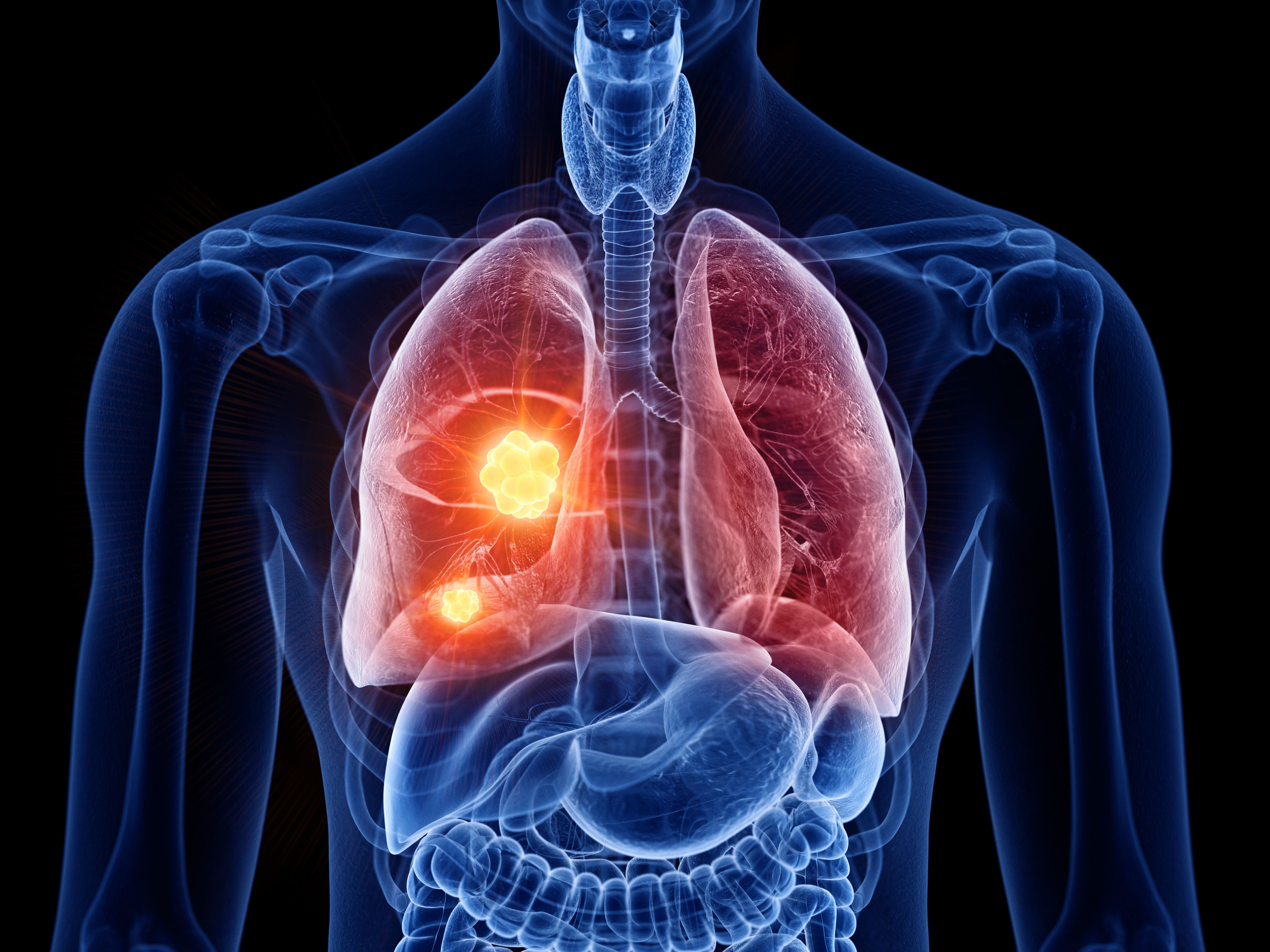
Oral vinorelbine with concurrent radiotherapy has promising results in unresectable NSCLC. | Image credit: Sebastian Kaulitzki - stock.adobe.com
In the phase 2, open, single-arm trial, patients received oral vinorelbine50 mg/m2 once per week for 2 weeks, followed by a dose of 30 mg/m2 weekly while treated with RT. Patients were eligible for inclusion if they were aged 45 to 80 years, had unresectable or inoperable stage III NSCLC, had finished at least 2 cycles of neoadjuvant chemoimmunotherapy, had a relative volume of normal lung that was not higher than 35%, and had an intolerance to concurrent intravenous chemotherapy. Patients were excluded if they had a history of the following: active concomitant malignancies, active severe infections, mixed small cell and NSCLC histology, thoracic RT, superior vena cava syndrome, or prior surgery. Patients who were pregnant or breastfeeding were also excluded.
Patients were evaluated 8 to 12 weeks after the completion of their chemoradiation therapy. There was no dose modification of oral vinorelbine while it was being taken, with administration being postponed if any grade 2 or 3 adverse event was reported. Objective response rate (ORR) at 3 months after the completion of RT was the primary end point of the study. Disease control rate (DCR), overall survival (OS), progression-free survival (PFS), and safety were secondary end points evaluated for the study.
There were 46 patients who were administered oral vinorelbine and treated with RT between March 2023 and April 2024. The median (IQR) age of the cohort was 62.5 years (58-70), and 91.3% were men. Squamous cell carcinoma was reported in 69.6% of the patients, and 43.5% had Eastern Cooperative Oncology Group performance status of 0. Five of the patients who were treated with oral vinorelbine were treated for less than 4 weeks due to adverse events.
A total of 33 patients had stable disease at the completion of RT and partial response was achieved in 11 patients. Partial response increased to 24 patients after 3 months of follow-up, and 20 patients had stable disease. The ORR was 52.1% (95% CI, 38.1%-65.9%) and DCR was 95.7% (95% CI, 85.5%-98.8%). The median OS was not reached, and the median PFS was 18.0 months after a median follow-up of 22.5 (20.3-24.4) months. The 24-month OS rate was 75.3% (95% CI, 60.9%-93.1%) and the 24-month PFS rate was 49.5% (95% CI, 36.9%-66.5%).
Grade 1 or 2 treatment-related adverse events were reported in 37 patients; no grade 3 or 4 adverse events were reported. The most common toxicities were leukopenia and anemia. The most common adverse events not related to toxicity were acute esophagitis (39.1% for grade 1, 17.4% for grade 2), treatment-related pneumonitis (13.1% for grade 1, 47.8% for grade 2), and radiation dermatitis (6.5% for grade 1, 2.2% for grade 2).
There were some limitations to this study. The patients were all from a single-arm study that had a small sample size, which could affect generalizability. Quality of life was not measured in the study. Continued observation is needed due to the immaturity of survival data.
Oral vinorelbine was found to have promising antitumor results in this trial when paired with concurrent RT in patients with unresectable stage III NSCLC. “Based on the results of this trial, phase 3 randomized trials that compare oral vinorelbine combined with RT to [complete concurrent chemoradiotherapy] for unresectable stage III NSCLC are warranted for further investigation,” the authors concluded.
References
- Lian X, Shayan G, Yang S, et al. Efficacy and safety of oral vinorelbine with concurrent radiotherapy in unresectable stage III non-small cell lung cancer following neoadjuvant chemoimmunotherapy: a single-arm, phase 2 trial. J Natl Cancer Cent. 2025;5(6):593-599. doi:10.1016/j.jncc.2025.06.004
- Forde PM, Spicer J, Lu S, et al. Neoadjuvant nivolumab plus chemotherapy in resectable lung cancer. N Engl J Med. 2022;386(21):1973-1985. doi:10.1056/NEJMoa2202170


