

- Center on Health Equity & Access
- Clinical
- Health Care Cost
- Health Care Delivery
- Insurance
- Policy
- Technology
- Value-Based Care
Early Stable Disease in BTC Predicts Improved Survival With Zanidatamab
Zanidatamab shows promise in extending survival for patients with HER2-positive biliary tract cancer, marking a significant breakthrough in treatment options.
The newest data from the HERIZON-BTC-01 trial (NCT04466891) show zanidatamab monotherapy can prolong overall survival (OS) in adult patients who have HER2-positive advanced biliary tract cancer (BTC),1 a significant advancement considering the rare cancer is most often fatal with a median OS of less than 13 months from diagnosis. These data from the completed trial were presented at the American Society of Clinical Oncology Gastrointestinal Cancers Symposium.
The dual HER-2 targeted bispecific monoclonal antibody received accelerated approval from the FDA in November 2024 for this indication,2 and it has since received conditional approval in China3 and the European Union.4
To be included in HERIZON-BTC-01, patients were required to have histologically or cytologically confirmed intra-hepatic cholangiocarcinoma (ICC; 27%), extra-hepatic cholangiocarcinoma (ECC; 19%), and gallbladder cancer (53%; be ineligible for curative resection, transplantation, or ablative therapies; have disease progression or be refractory to at least 1 prior gemcitabine-containing systemic chemotherapy regimen; and have Eastern Cooperative Oncology Group performance status (ECOG PS) of 1 or below, adequate organ function, and adequate cardiac function, as defined by preserved ejection fraction.5
Patients were enrolled between September 15, 2020, and March 16, 2022, after which they were placed into 1 of 2 groups by immunohistochemistry (IHC) score:
- Cohort 1: IHC 2+ or 3+
- Cohort 2: IHC 0 or 1+
The treatment regimen was intravenous zanidatamab 20 mg/kg every 2 weeks, and tumor response was evaluated after the eighth week, plus or minus 1 week. Landmark survival analyses took place in week 9 (the initial evaluation) and week 25 (the final evaluation), by which point all responders had experienced a complete response (CR) or a partial response (PR). The primary outcome of interest was best response prior to week 25.
Overall, for the patients with IHC3+ tumors who were included in this post hoc analysis (N = 27), most (88.9%; n = 24) experienced a PR by week 9, and the remaining 3 cases were CRs. Median OS was 70% greater for any-responders vs patients with stable disease (SD) and 175% greater vs all others:
- Any-responders: 24.5 months (95% CI, 16.6 months-not estimable [NE])
- Patients with SD: 14.4 months (95% CI, 6.5-21.1)
- All others: 8.9 months (95% CI, 2.3-14.3)
These numbers are equivalent to a 60% reduced risk of disease progression or death (HR, 0.40; 95% CI, 0.19-0.83) for any-responders compared with patients with SD and a 62% reduced risk of disease progression or death (HR, 0.38; 95% CI, 0.17-0.82) for patients with SD compared with all others. Overall death risk reductions were 70% by week 9 and 79% by week 25 for the patients who exhibited responses to zanidatamab.


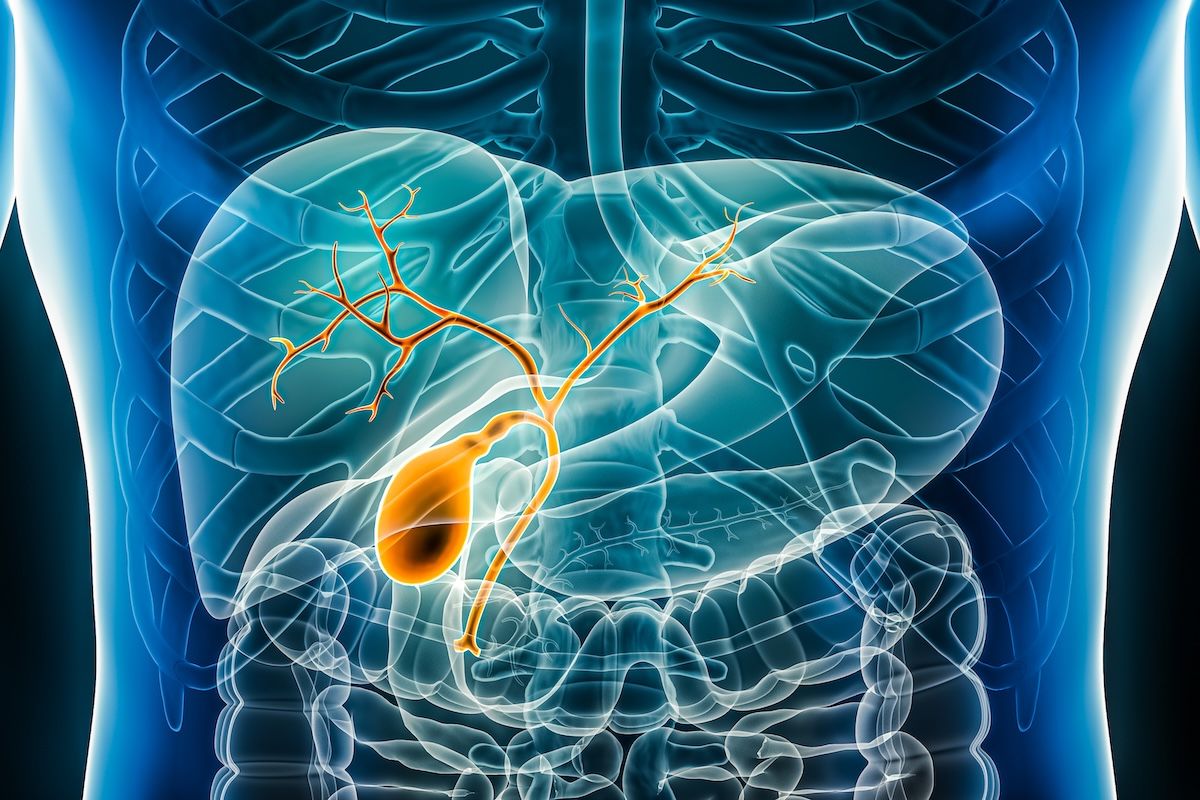
The international HERIZON-BTC-01 trial is investigating zanidatamab monotherapy in locally advanced, unresectable, or metastatic HER2-amplified biliary tract cancer, with the agent showing great promise at extending survival. | Image Credit: © Matthieu-stock.adobe.com
In addition, by week 25, 7 of 20 patients who had reached SD status by week 9 had progressed to a PR, and there were 36 overall responders, 3 CRs and 33 PRs; of this group, 12 patients had stable disease, and 6 patients experienced progressive disease. Post the 9-week analysis, survival results remained positive and consistent, the authors highlighted, with any responders to zanidatamab exhibiting a median OS of 20 months (95% CI, 13.0-29.3); patients with SD, 8.4 months (95% CI, 0.5-15.2); and patients with progressive disease, 5.4 months (95% CI, 1.8-NE).
Breaking these data down further, the following results were seen:
- Asian patients had the highest rate of CR or PR (69%) but also the highest rate of PD (62%)
- White patients had the highest rate of SD (50%)
- Patients with an ECOG PS of 1 vs 0 had higher rates of CR/PR (77% vs 23%) and SD (57% vs 43%) but also higher PD (54% vs 46%)
- Cases of GBC vs ICC and ECC had the highest rate of CR/PR (63% vs 20% vs 17%, respectively) but also the highest rate of PD (54% vs 15% vs 31%)
- ICC vs GBC and ECC had the highest rate of SD (57% vs 29% vs 14%)
- Patients with stage IV disease at diagnosis had the highest rate of CR/PR (54%) vs those diagnosed at stage I (3%), II (17%), or III (20%), and of SD (50% vs 36% vs 7% vs 7%, respectively), but also the highest rate of PD (62% vs 31% vs 8% vs 0%)
“These results support a prognostic association between objective response or SD with zanidatamab and longer OS in BTC,” the authors wrote. “Additionally, findings suggest a clinical benefit for patients who achieve early SD and support continued zanidatamab treatment.”
The patients in this study were primarily female patients (55%), of an Asian race (61%), had an ECOG PS of 1 (68%), and were diagnosed at stage IV disease status (55%).
Combination zanidatamab and standard-of-care treatment for HER2-positive BTC is being evaluated for first-line administration in the ongoing phase 3 HERIZON-BTC-302 trial (NCT06282575).
References
- Harding JJ, Fan J, Oh DY, et al. Landmark analysis of overall survival (OS) by objective response in patients (pts) with previously treated, advanced HER2-positive biliary tract cancer (BTC): post hoc analysis of the HERIZON-BTC-01 trial. Presented at: American Society of Clinical Oncology Gastrointestinal Cancers Symposium; January 8-10, 2026; San Francisco, CA. Abstract 545.
- Santoro C. FDA approves zanidatamab-hrii for HER2+ biliary tract cancer. AJMC®. November 21, 2024. Accessed January 9, 2026. https://www.ajmc.com/view/fda-approves-zanidatamab-hrii-for-her2-biliary-tract-cancer
- Zymeworks announces NMPA approval of zanidatamab in China for adults with previously treated, unresectable or metastatic HER2-high expression (IHC3+) biliary tract cancer. News release. Zymeworks. May 30, 2025. Accessed January 9, 2026. https://ir.zymeworks.com/news-releases/news-release-details/zymeworks-announces-nmpa-approval-zanidatamab-china-adults
- Doherty K. Zanidatamab nets European approval in pretreated HER2+ biliary tract cancer. OncLive®. July 1, 2025. Accessed January 9, 2026. https://www.onclive.com/view/zanidatamab-nets-european-approval-in-pretreated-her2-biliary-tract-cancer
- A study of ZW25 (zanidatamab) in subjects with advanced or metastatic HER2-amplified biliary tract cancers (HERIZON-BTC-01). ClinicalTrials.gov. Updated September 15, 2025. Accessed January 9, 2026. https://clinicaltrials.gov/study/NCT04466891


