

- Center on Health Equity & Access
- Clinical
- Health Care Cost
- Health Care Delivery
- Insurance
- Policy
- Technology
- Value-Based Care
In Memoriam: J. Sanford “Sandy” Schwartz, MD


J. Sanford Schwartz, MD
AJMC® Editor-in-Chief,
1995-2002
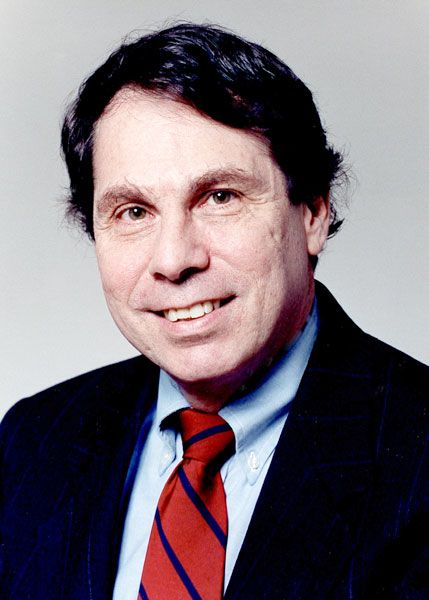
It is with great sadness that we announce the death of our close friend and former editor-in-chief of The American Journal of Managed Care® (AJMC®), J. Sanford Schwartz, MD. Sandy, as we affectionately knew him, was the Leon Hess Professor of Medicine, Health Management, and Economics at the School of Medicine and the Wharton School of the University of Pennsylvania. Penn was Sandy’s academic home for 5 decades, where he held several important positions, including director of the Leonard Davis Institute for Health Economics from 1989 to 1998 and codirector of Penn’s Robert Wood Johnson Clinical Scholars Program. Sandy was an active member of several national organizations including the National Academy of Medicine, where he served as vice chair and council member, and the Society of Medical Decision Making, where he served as president. Sandy was AJMC®’s editor-in-chief between 1995 and 2002, a time during which the journal’s reach and international reputation increased dramatically.
Being a mentor was one of the highlights of Sandy’s career. Known for his accessibility (Mark wrote his first academic abstract in Sandy and his wife Sue’s bedroom), Sandy shared his talents with hundreds of students, researchers, and clinicians—young and old. As Faculty Director of Ware House, Sandy and Sue offered prospective students a place to stay when they visited campus and created a home away from home for many undergraduates, hosting Passover Seders and Thanksgiving dinners at their house and providing guidance to countless students as they transitioned to college and then on to postcollege life. Sandy reveled in watching his trainees grow their own national reputations in academia, the private sector, and public service. He may have been just as likely to drive you to the airport as to comment on your research methods. It was his characteristic candor and good humor, and his own method to guiding students and researchers toward excellence, that made Sandy special. Over the years, he received numerous recognitions and awards including the Christian R. and Mary F. Lindback Award for Distinguished Teaching—the University of Pennsylvania’s highest teaching award—and the Distinguished Graduate Award from Penn’s Perelman School of Medicine. And he did all this while hardly ever wearing a sport coat and necktie.
Sandy inspired all who came in contact with him to become better people. He left an indelible impression on students and peers alike—including the two of us—not only as a clinician and researcher, but as a mentor and friend. He will be dearly missed.


Quality of Life: The Pending Outcome in Idiopathic Pulmonary Fibrosis
February 6th 2026Because evidence gaps in idiopathic pulmonary fibrosis research hinder demonstration of antifibrotic therapies’ impact on patient quality of life (QOL), integrating validated health-related QOL measures into trials is urgently needed.
Read More


Building Trust: Public Priorities for Health Care AI Labeling
January 27th 2026A Michigan-based deliberative study found strong public support for patient-informed artificial intelligence (AI) labeling in health care, emphasizing transparency, privacy, equity, and safety to build trust.
Read More

Ambient AI Tool Adoption in US Hospitals and Associated Factors
January 27th 2026Nearly two-thirds of hospitals using Epic have adopted ambient artificial intelligence (AI), with higher uptake among larger, not-for-profit hospitals and those with higher workload and stronger financial performance.
Read More
Motivating and Enabling Factors Supporting Targeted Improvements to Hospital-SNF Transitions
January 26th 2026Skilled nursing facilities (SNFs) with a high volume of referred patients with Alzheimer disease and related dementias may work harder to manage care transitions with less availability of resources that enable high-quality handoffs.
Read More

