

- Center on Health Equity & Access
- Clinical
- Health Care Cost
- Health Care Delivery
- Insurance
- Policy
- Technology
- Value-Based Care
Addressing the Fragmentation of MS Care: Kavita Nair, PhD


Kavita Nair, PhD
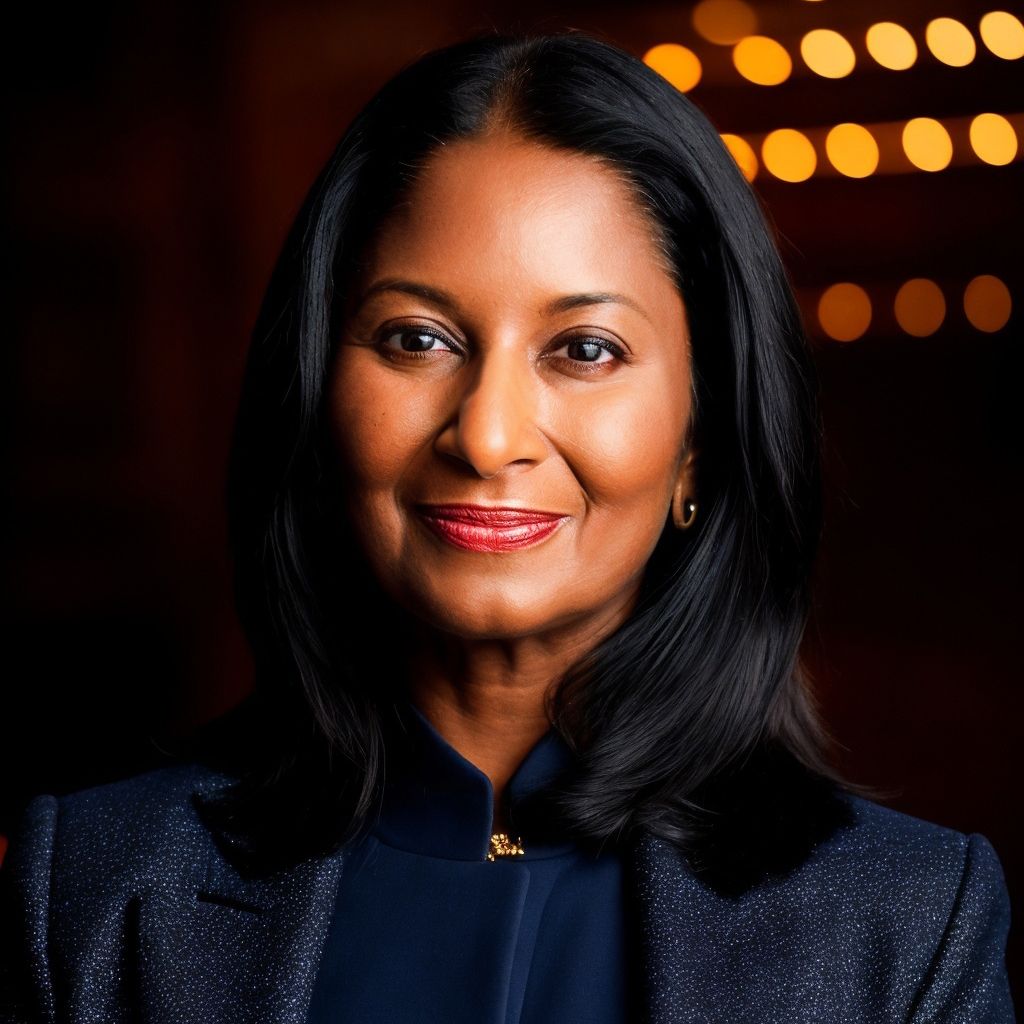
The rapid proliferation of high-efficacy disease-modifying therapies for multiple sclerosis (MS) has revolutionized the treatment landscape, yet significant gaps remain in how health systems organize and deliver multidisciplinary care, explained Kavita Nair, PhD, professor in the Department of Neurology and the Center for Pharmaceutical Outcomes Research at the University of Colorado Anschutz Medical Campus, who discussed the persistent challenges of fragmentation and geographic disparities.
While clinical advancements have improved outcomes, the administrative and logistical hurdles of MS management—ranging from prior authorization delays to the lack of specialized care in rural regions—continue to impact the patient experience. In the first part of an interview with The American Journal of Managed Care® (AJMC®), Nair outlined the mismatch between the pace of shared decision-making and drug approval, the success of telehealth and Project ECHO models in reaching underserved populations, the potential for home infusion to improve treatment adherence, and more.
AJMC: From your viewpoint, what are the most persistent gaps in MS care delivery within health systems today, especially regarding multidisciplinary and coordinated care?
Nair: Across health systems, the gaps I see most consistently are less about the availability of MS disease-modifying therapies—because we've seen a tremendous proliferation, which is very exciting for patients and providers—but more about how we organize care [for] the MS patient over time. I'll outline the key gaps as your question.
First is fragmentation. MS care really touches multiple domains. It touches neurology, radiology, infusion, specialty, pharmacy, primary care, rehabilitation, behavioral health, and now—with the new guidelines that just came out in 2024—ophthalmology and [it] also touches urology. When those pieces are not tightly connected, you know, patients experience delays: delays for MRIs, delays to getting a treatment approved, [and] delays therefore, in response to disease activity. Health systems often have strong individual components but not a single "front door" to [provide] accountable care pathways for MS.
MS is also a very singular neurological disease in that it affects all domains. It's not just a primarily physical disease or a cognitive disease. Unlike, for example, Alzheimer's—[though] eventually all neurodegenerative diseases affect all domains—MS affects [nearly] all of it [early on]. And so there are also aspects of employment, social services, [and applying for] long-term disability. The fragmentation is probably one of the most persistent gaps. Our clinic, for example, used to have an attorney who was also one of our health care practitioners [to] help our patients fill out paperwork, because most MS patients tend to be in the working-age population. But if you don't have that resource—and it's not necessarily expected for clinics and [academic] centers to have that resource—that becomes an added spoke, if you will, of a wheel that an MS patient has to deal with.
I think the second gap would be [the pace of care]. We are at a time where, until 2010, we had just 4 drugs, and they were really [for] symptom management. From 2010 until 2026, we have about 23 drugs. This is [truly] disease-modifying. This is going to sound strange, but if you were to be diagnosed with MS, this is probably the most optimal time because we have such amazing treatments and more coming.
But there is a mismatch between the pace of MS shared decision-making for a patient and a provider and the care team, and the pace of getting the drug approved. That's really because we have [prior authorizations]—we have sort of "gatekeeper" effects. I know our payer community is largely pharmacists and pharmacy directors, also very clinically trained, but because, in some part, as a result of the number of drugs, you know, we have drugs that are 30 years old, and we have drugs that are 6 months old—[there’s a] mismatch between being able to get on a new drug. [We know that] time is brain [and] treat early, treat aggressively.
[The system] causes a delay in how soon a patient and their provider can make a decision [due to] prior authorization, step therapy, [and] getting vaccinations. You have to get vaccinations because these drugs compromise or depress your immune system. That's just a part of the care pathway. Scheduling an infusion, because these patients have to get infusions, maybe every 2 [months], every 6 months, [or] every month [depending on the] different drug [and it] can all take time and delay the care.
If patients are not able to get the drug approved, can't get into an infusion center on time, [or] have to wait to get their vaccines…all of this can delay getting the drug that can really reduce their disease activity or prevent a relapse.
AJMC: Access to specialized MS care remains uneven, particularly in rural areas. How are health systems and clinics addressing geographic disparities, and what innovative models (e.g., telehealth, mobile clinics) are showing promise?
Nair: I love this question only because it's so pertinent to the state I live in. I live in Colorado, where we have 68 counties and 64 or 65 of them are rural. We have very urban centers where most of the large MS clinics—[such as] our own Rocky Mountain MS Center, which is a large center of excellence with 4500 patients—[are] located. But what about the rest? Geographic disparities in MS are very real, and they show up in very practical ways.
How are we addressing it? Let's talk about some of the gaps. When you have patients in rural areas, you run into the issue of just not having MS specialists. You have neurologists. You may not have MS specialist, but you have neurologists. You maybe have a lack of specialists, and not all general neurologists want to learn the intricacies of treating a patient with MS. That's why they went into general neurology. You do have a lack of access to specialists.
Then you have long travel. In Colorado, we just had a massive snowstorm. We're recording this on the 28th of January, and the entire country, or most of the country, had a massive snowstorm, and patients have to travel 3 to 4 hours to come into central Aurora, which is where our campus is located. That becomes an issue, not just for their visits, but also to receive their infusions, because we also have limited infusion centers while the growth of the standalone infusion centers has really proliferated over the last several years, as we get into more rural areas. Then, [in] the Rocky Mountain region we have Wyoming and Utah—especially places like Wyoming—there are very few infusion centers. That becomes even more of an issue, [when] you're in a state that has limited resources, and then you have even fewer integration of some of the ancillary services—rehabilitation, physical therapy, behavioral health, and all of the other encompassing support services and areas that that person with MS needs.
You have a thinning of the workforce and a very few surrounding aspects of MS care that's necessary in rural areas. How are we addressing this? One of the things that we have done is, during the pandemic, everyone had to switch to telehealth, and everyone complained, but one of the subspecialties that really adopted it very well and came out smelling like roses from telehealth was neurology. Neurology really thrived with telehealth and has continued to thrive after that. In fact, the American Academy of Neurology has been very vocal in extending the telehealth capabilities and reimbursement way past the pandemic. That's one of the ways in which telehealth has been really good in helping MS patients—checking in on them.
We are trying some innovative ways to see, if a patient is stable, you don't really have to see them in person. You can see them over telehealth. There is some artificial intelligence (AI)—and I won't get into the technical aspects, because I don't know what those are—to see, can you do kind of a visual neuro exam for stable patients? Telehealth can really obfuscate some of the limitations for patients to have to come in and drive 4 hours to see their MS specialist. Neurology has been very much in the forefront of developing models and innovations to help telehealth mitigate some of the issues of rural health as well. The other promising approach is kind of this hybrid scheduling to say, “You don't have to come in every 3 months. You can do some visits virtually. You can do some visits that are in person, and we'll try and work around the weather issues.”
We're also trying to do the notion of Project ECHO, [which is a] model where we, the specialist or the sub specialist, for example—and we've done this at our university—we spend about 6 to 8 weeks over lunch sessions—and it really depends on the disease states—training general neurologists or providers in these rural areas. It's a free program, and it’s a nationwide [program to address] how do you manage the basics of managing an MS patient? You don't have to go back to school and spend 2 years learning how to be an MS neurologist. But if you had an MS patient and you need to do some basic assessment [now you can]. And we will co-manage the patient. You can send them to the university, for example, to get them started on some of these more complicated drugs, and once they're stable, you can manage them at your site—you're still keeping your patient. The rural health provider gets to keep their patient and answer questions. The patient gets to get the care they need in their area, but also the expertise of the university. Project ECHO models have been very successive as well.
One of the things we're trying to do is—because so many of these newer drugs are therapies that really depress the immune system of the patients—make sure that patients get vaccinated. That's hard. I mean, I went to get vaccinated by flu shot [and] I had to stand in line for an hour and a half. There are just generally workforce issues. Can we design vaccine clinics [or] mobile vaccine clinics…in these rural areas and go to the patient, versus having a patient go to a CVS?
Finally, my favorite aspect is [that] for patients who are taking infusible drugs and don't have access to infusions, can we do home infusions? We did a study1 to see [if] home infusions work for patients during the pandemic, and it was a huge success. It was not just the rural patients because they don't really have access. MS affects young people, or at least it's most prevalent during the working age [population]. [If] you're working a construction job, you can't really get off at 3 pm and go to a clinic that closes at 5 pm. Or patients who are young and working tech jobs and have to be online from 7 [am] to 5 [pm]. And people have nontraditional work hours or have small children at home. Home infusion capacities can really help.
AJMC: Are there other potential barriers patients face when receiving infusible MS therapies in underserved regions, and strategies to reduce disruptions in care (e.g., site-of-care models, buy-and-bill vs specialty pharmacy)?
Nair: MS has about 22 therapies, and from a tiering standpoint—and I don't mean a formulary tiering standpoint, I mean from an efficacy and safety standpoint—the kind of highest tier [with] high efficacy is our drugs that are almost all infusibles with one self-injectable. There is something to be said about if infusions are complicated and hard to get to because of challenges [that] a self-injectable could be a way to go because we do have self-injectables in that therapy. It's really a question of patient preference as well. For the self-injectable, it's once a month, and I know when I'm traveling and I'm taking any self-injectable, it's like, “Do I have it in my hand luggage if I get delayed?” Then it's sitting in my hand luggage without the ice pack. There are those things to think about as well. How do you talk to patients and educate them and train them? There are training videos.
I think home infusion is the cheapest option. I know our payers love it because we pay the least for it, and we have trained infusion centers and then nurses to say that when you're being infused in the home, there are some precautions that need to be taken. You can have your infusion nurse that infused you at some of these centers FaceTime you to give you some reassurance. It's a very well thought out, carefully set up situation. You have to make sure that you don't have little kids running around… It's a very safe environment for both the patient as well as the nursing staff and the nurses, who are trained to go and give home infusion. They go through an extensive training so that if there are infusion[-related] reactions, which can happen, they know what to do. There are lots of precautions. There are ways to bring home infusions to a rural area that I think we should explore more and encourage more and educate both the patient as well as their treating provider. Talk to your patient more about it and don't be so scared to talk to them about it.
Reference
Barrera B, Simpson H, Engebretson, et al. Safety and patient experience with at-home infusion of ocrelizumab for multiple sclerosis. Ann Clin Transl Neurol. 2023;10(4):579-588. doi:10.1002/acn3.51745


