

- Center on Health Equity & Access
- Clinical
- Health Care Cost
- Health Care Delivery
- Insurance
- Policy
- Technology
- Value-Based Care
ACIP Delayed Hepatitis B Vaccine Schedule Vote Amid Safety Controversy
ACIP delayed the vote on the hepatitis B vaccine schedule amid ongoing controversy and misinformation surrounding vaccine safety and infant immunization.
The CDC Advisory Committee on Immunization Practices (ACIP) delayed its vote on the childhood and adolescent immunization schedule for the hepatitis B vaccine amid controversy over its necessity and safety.
HHS Secretary Robert F. Kennedy Jr has consistently expressed his skepticism of vaccines and spread false information claiming they cause autism.1 Shortly after his confirmation, Kennedy appointed a new vaccine advisory committee that is now questioning the safety and efficacy of the hepatitis B vaccine for infants, prompting the debate, now rescheduled for Friday, December 5. Despite extensive research supporting the safety and efficacy of the hepatitis B vaccine in infants, Kennedy has updated the CDC’s website to say that a link between vaccines and autism cannot be ruled out, which immunization advocates say can stoke fear in parents making choices on vaccination.2
The vote was delayed after some panelists expressed confusion about the voting language and asked to have the text sent in advance.


ACIP delayed voting on the hepatitis B vaccine schedule as safety debates and policy tensions escalate. | Image Credit: @ didesign - stock.adobe.com
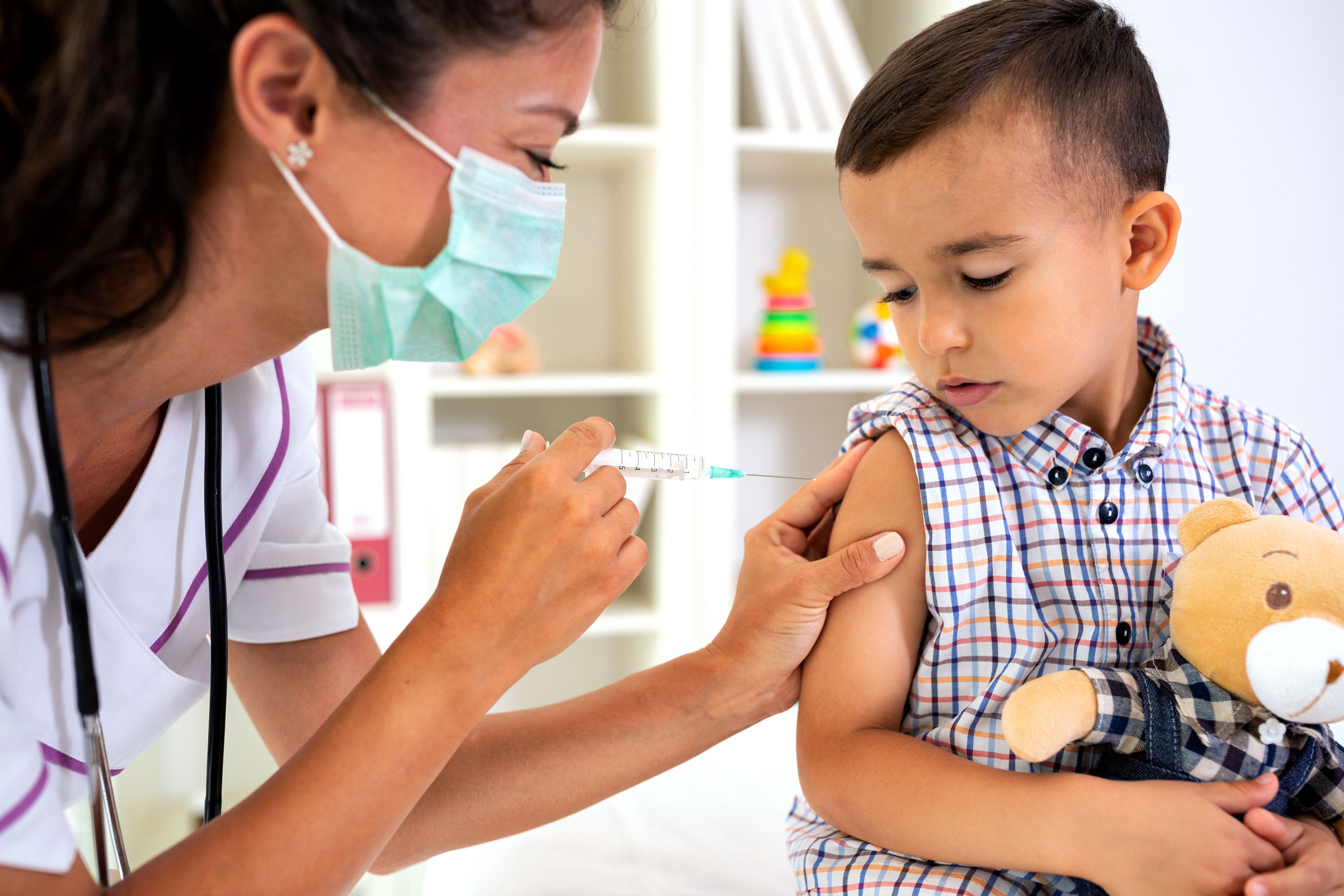
What Is Hepatitis B, and Is the Vaccine Effective?
Hepatitis B is a liver disease caused by the hepatitis B virus (HBV) that can lead to chronic illnesses, organ failure, and other severe conditions requiring hospitalization. The severity varies with disease duration. Adverse events can occur at any stage and are often similar in acute and chronic forms. Many individuals have asymptomatic HBV because it can remain dormant for decades after initial exposure.3
The highly infectious disease is transmitted through bodily fluids, including sexual contact, shared drug administration equipment, and childbirth. The vaccine prevents newborn transmission; otherwise, 90% of infected infants will develop chronic illness. Although less likely, 30% of children infected between the ages of 1 and 5 years will remain chronically infected.3
The current vaccination schedule followed a 3-dose series, with the first dose administered within 24 hours of birth, regardless of the mother's HBV status.4 Since implementation in 1991, billions of children worldwide have received a vaccine, a major preventive tool in countries where 8% to 15% of children previously became infected with HPV, according to the World Health Organization. Thus, the percentage of children infected with HPV has declined to less than 1%.5
What Does This Decision Mean for Children?
ACIP recommendations are not mandated; therefore, regardless of tomorrow's decision, parents can still refuse the vaccine at birth. However, in 47 states, the hepatitis B vaccine is required for a child to attend schools in grades K through 12.6
Jason Goldman, MD, a liaison to the ACIP for the American College of Physicians, criticized the advisory board for wasting government funds to debate a vaccine proven effective and safe. Goldman stated that all vaccines are encouraged suggestions but ultimately an individual decision.
“The best thing you can do is adjourn the meeting and discuss vaccine issues that actually need to be taken up,” he said during the meeting.
Conversely, Evelyn Griffen, MD, who is board certified in obstetrics and gynecology, questioned whether HBV prevention should focus on infants rather than increasing adult awareness and testing access.
“Is it incumbent on the babies to save us from this when this really may be more of an adult program?” Griffen said during the discussion, addressing the screening gap for hepatitis B in prenatal care that has widened since 2002.7
References
1. Arablouei R, Abdelfatah R. The history behind an enduring public health falsehood - that vaccines cause autism. NPR. March 5, 2025. Accessed December 4, 2025. https://www.npr.org/2025/03/05/nx-s1-5285571/the-history-behind-an-enduring-public-health-falsehood-that-vaccines-cause-autism
2. Stein R, Huang P. The CDC revives debunked “link” between childhood vaccines and autism. NPR. November 20, 2025. Accessed December 4, 2025. https://www.npr.org/sections/shots-health-news/2025/11/20/nx-s1-5615040/cdc-rfk-childhood-vaccines-autism
3. Hepatitis B. CDC. Accessed December 4, 2025. https://www.cdc.gov/hepatitis-b/index.html
4. Child immunization schedule notes. CDC. October 7, 2025. Accessed December 4, 2025. https://www.cdc.gov/vaccines/hcp/imz-schedules/child-adolescent-notes.html
5. Hepatitis B is preventable with safe and effective vaccines. World Health Organization. Accessed December 4, 2025. https://www.who.int/southeastasia/activities/hepatitis-b-is-preventable-with-safe-and-effective-vaccines
6. Hepatitis B vaccine requirements for childcare and school (KG–gr 12). Immunize.org. July 3, 2025. Accessed December 4, 2025. https://www.immunize.org/official-guidance/state-policies/vaccine-requirements/hepb-child-school-2024/
7. Conners EE, Panagiotakopoulos L, Hofmeister MG, et al. Screening and testing for hepatitis B virus infection: CDC recommendations - United States, 2023. MMWR Recomm Rep. 2023;72(1):1-25. doi:10.15585/mmwr.rr7201a1


Quality of Life: The Pending Outcome in Idiopathic Pulmonary Fibrosis
February 6th 2026Because evidence gaps in idiopathic pulmonary fibrosis research hinder demonstration of antifibrotic therapies’ impact on patient quality of life (QOL), integrating validated health-related QOL measures into trials is urgently needed.
Read More


