

- Center on Health Equity & Access
- Clinical
- Health Care Cost
- Health Care Delivery
- Insurance
- Policy
- Technology
- Value-Based Care
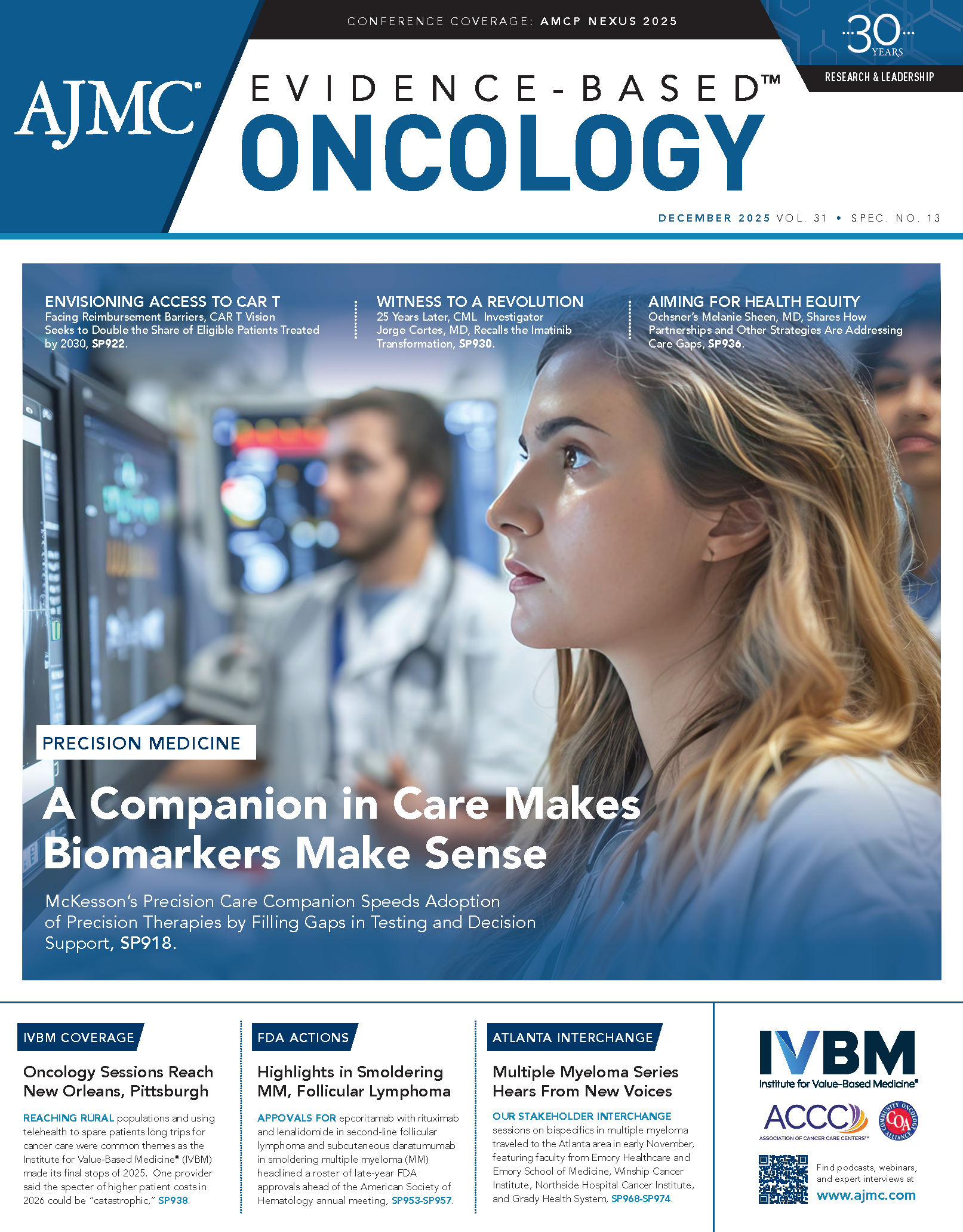
Precision Medicine in Oncology: From Early Detection to Dynamic Disease Management


Sucharu "Chris" Prakash, MD

Gone are the days when oncologists reacted to a cancer diagnosis by using the few drugs we had and hoping for the best. We have evolved from being reactive to proactive, primarily due to advances in precision medicine. From the discovery of circulating DNA to next-generation sequencing (NGS), whereby we can find even minute amounts of tumor-specific alterations, we have come a long way.
Precision medicine in oncology has matured into a sweeping continuum that spans early detection, individualized therapy selection, and dynamic disease monitoring. What was once an aspirational concept is now the foundation of modern cancer care—driven by advances in genomic science, liquid biopsy technologies, and artificial intelligence.
The continuum begins with multicancer early detection (MCED), which seeks to identify malignancies well before symptoms arise. If fully realized, this concept could fundamentally shift oncology from reaction to prevention. By analyzing tumor-derived signals in circulating cell-free DNA, MCED assays hold the potential to detect dozens of cancers with a simple blood draw. Many laboratories have ongoing clinical trials to validate this concept. Early results are promising but may need further validation and health-economic data before broad adoption.
Moving along the continuum, once cancer is identified, NGS plays a pivotal role in shaping personalized therapy. Comprehensive genomic profiling enables oncologists to detect actionable mutations, which guide decisions on targeted therapies and immunotherapy. Despite proven benefits, fewer than half of patients with advanced cancer in the US receive NGS, due to systemic barriers and challenges. As the director of quality services at Texas Oncology, I took on this challenge by implementing a systemwide biomarker testing initiative to systematize and democratize access to precision medicine. Through standardized pathways, streamlined ordering, and clinician education, Texas Oncology now conducts biomarker testing for nearly 100% of eligible patients with advanced solid tumors. This level of adoption ensures that genomic information reliably informs treatment decisions—not by chance or provider variation, but by design.
Beyond tissue-based profiling, liquid biopsies have transformed how we monitor evolving tumor biology. By capturing circulating tumor DNA shed into the bloodstream, this minimally invasive method can detect emerging resistance mutations and guide therapeutic adjustments sooner than traditional imaging. This modality can be particularly beneficial when there is a paucity of tissue, allowing clinicians to adapt care with unprecedented speed and precision.
Pushing even further into the predictive domain, minimal residual disease (MRD) assays are redefining posttreatment surveillance, revealing microscopic disease months before clinical recurrence. As ongoing trials evaluate MRD-guided therapy escalation and de-escalation strategies, MRD is poised to reshape standards of care—helping clinicians intervene earlier, avoid overtreatment, and better stratify recurrence risk.
Layered across this continuum is the accelerating influence of artificial intelligence (AI). AI models trained on vast genomic, clinical, and imaging data sets can identify novel biomarker signatures, predict treatment response, and automate patient identification for testing and clinical trial enrollment.
As precision medicine evolves, its future depends on integrating science, technology, and systems-level execution. The goal is not only to treat cancer precisely, but to detect it earlier, monitor it more intelligently, and deliver equitable access to every patient. This can only happen if we fundamentally change our clinical mindset and health care systems to align with this rapidly evolving field.


Empowering Children and Parents Through Technology: Opportunities, Challenges, and Future Directions
January 15th 2026Digital health platforms improve pediatric care by offering customized, interactive tools for children and parents. They enhance education, support, and engagement while tackling challenges related to access, usability, and privacy.
Read More

Insights Into Patient Portal Engagement Leveraging Observational Electronic Health Data
January 12th 2026This analysis of more than 250,000 adults at least 50 years old with chronic conditions showed lower portal use among older, non–English-speaking, and Black patients, underscoring digital health equity gaps.
Read More

Subjective and Objective Impacts of Ambulatory AI Scribes
January 8th 2026Although the vast majority of physicians using an artificial intelligence (AI) scribe perceived a reduction in documentation time, those with the most actual time savings had higher relative baseline levels of documentation time.
Read More

Telehealth Intervention by Pharmacists Collaboratively Enhances Hypertension Management and Outcomes
January 7th 2026Patient interaction and enhanced support with clinical pharmacists significantly improved pass rates for a measure of controlling blood pressure compared with usual care.
Read More


