

- Center on Health Equity & Access
- Clinical
- Health Care Cost
- Health Care Delivery
- Insurance
- Policy
- Technology
- Value-Based Care
Top 5 Most-Read CLL Articles of 2025
This year’s most-read articles on CLL highlighted research and insights on personalized therapy, long-term remission, and next-generation cell treatments.
As therapy for chronic lymphocytic leukemia (CLL) continues to evolve, 2025 brought research, regulatory news, and expert insights in the space. The top 5 most-read pieces about CLL on AJMC.com this year included findings on treatment advances, drug approvals, and more.
Here are the 5 most-viewed CLL/small lymphocytic lymphoma (SLL) articles of 2025.


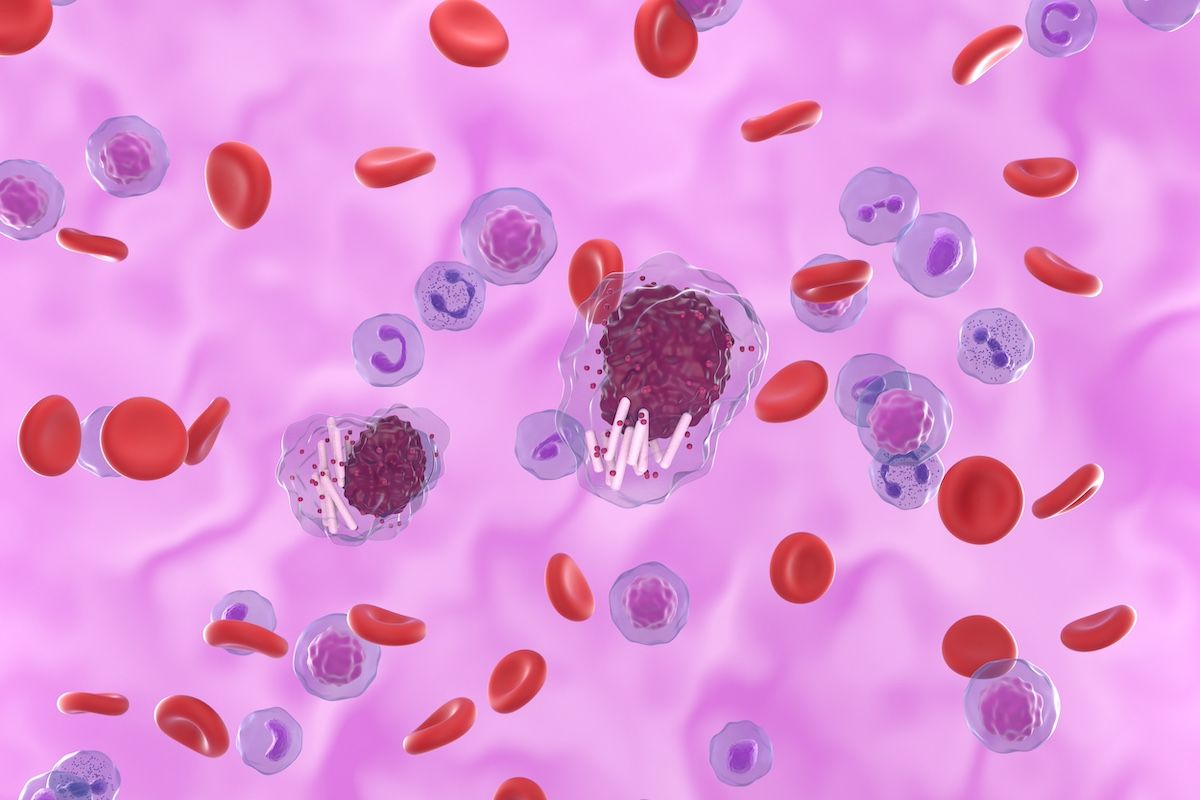
This year’s most-read articles on CLL highlighted research and insights on personalized therapy, long-term remission, and next-generation cell treatments. | Image Credit: © Laszlo - stock.adobe.com
5. FDA Approves Tablet Formulation of Zanubrutinib for All Indications
The FDA approved a 160-mg tablet version of zanubrutinib (Brukinsa; BeOne), halving patients’ daily pill burden from 4 capsules to 2 tablets. This seemingly small change has important implications: greater convenience and possibly better adherence, especially for older or frailer patients often treated for CLL. The approval across 5 indications—CLL or SLL, mantle cell lymphoma, Waldenström macroglobulinemia, marginal zone lymphoma, and follicular lymphoma—makes zanubrutinib the overall market share leader among Bruton tyrosine kinase inhibitors, according to the manufacturer’s news release.
4. Venetoclax Shows Good Results Even in Short-Telomere Patients With CLL
Data from analyses of patients enrolled in the CLL14 trial suggest that venetoclax (Venclexta; AbbVie) may “neutralize” the historically worse prognosis associated with short telomere length. In contrast to chemotherapy-based regimens, where short telomeres correlated with shorter progression-free survival (PFS), patients treated with venetoclax + obinutuzumab did not show a significant difference in PFS based on telomere length. These results offer reassurance that targeted therapy can blunt certain indicators of poor prognosis and hint toward wider eligibility for effective treatment.
3. BeiGene’s Mehrdad Mobasher, MD, MPH, Discusses CLL Data, Pipeline Following ASH 2024
In this interview, the chief medical officer for hematology at BeiGene—soon to transition to BeOne Medicines—reflects on long-term data, emerging combinations, and future directions in CLL therapy as showcased at the 66th American Society of Hematology (ASH) Annual Meeting and Exposition, held from December 7 to 10, 2024, in San Diego, California. Among highlights were 5-year follow-up data from the SEQUOIA trial showing sustained benefits of zanubrutinib vs bendamustine-rituximab, as well as encouraging early results of a fixed-duration regimen combining zanubrutinib with a novel BCL2 inhibitor (sonrotoclax), which aimed for deep remissions with less toxicity. Mobasher’s insights captured the growing momentum behind chemotherapy-free, time-limited regimens and renewed emphasis on tolerability and long-term safety.
2. New Generation of CAR T May Elicit Improved CR Rates in CLL
A small early-phase study of third-generation chimeric antigen receptor (CAR) T-cell therapy showed promising efficacy in patients with heavily pretreated, relapsed/refractory CLL. Among 9 treated patients (median of 5 prior therapies), 6 (67%) achieved a complete response (CR), and 5 of them had undetectable minimal residual disease (uMRD) 3 months post infusion. With a median follow-up of 27 months, 69% remained alive, although PFS was modest. Still, the high CR and uMRD rates mark a potential advance over prior-generation CAR T-cell therapy in CLL.
1. Personalized CLL Therapy With MRD Guidance Improves Survival Outcomes
Topping the list in 2025, this study demonstrated that using MRD to guide first-line therapy with ibrutinib + venetoclax significantly improved outcomes over standard chemoimmunotherapy (fludarabine–cyclophosphamide–rituximab; FCR). After a median of roughly 3.5 years of follow-up, only 4.6% of MRD-guided patients progressed or died vs 28.5% in the FCR cohort; 3-year PFS was 97.2% vs 76.8%, and overall survival was 98.0% vs 93.0%. Investigators noted that many patients in the MRD-guided group could stop treatment therapy early: by year 3, more than half (58%) had discontinued, and by 5 years, nearly two-thirds had uMRD in bone marrow, with more than 90% achieving uMRD in peripheral blood. The findings validate MRD-driven personalized therapy as a feasible strategy that maximizes efficacy while minimizing treatment duration and potential toxicity.


