

- Center on Health Equity & Access
- Clinical
- Health Care Cost
- Health Care Delivery
- Insurance
- Policy
- Technology
- Value-Based Care
Redefining Oncology Through the Academic-Community Dyad Model
W. Kimryn Rathmell, MD, PhD, FASCO, champions the dyad model to enhance oncology care accessibility, bridging gaps between rural patients and clinical trials.
W. Kimryn Rathmell, MD, PhD, FASCO, advocated for transformative oncology models that prioritize health care equity and accessibility through collaboration in her keynote address at the American Society of Clinical Oncology Gastrointestinal Cancers Symposium, “Meeting Patients With Cancer Where They Are—The Role of Dyad Partnerships in Oncology.” Focusing on disparities in rural health care and remarking that geographic isolation is likely to lead to disparate mortality rates and lower patient participation in research, she called for a systemic shift toward integrated, tech-driven solutions that simplify the patient journey and accelerate medical discovery.1
“It is really important that we lean into the ability to be connected. That action that comes from that opportunity is to look at how we deliver and create new models of communication and care,” Rathmell said, “meeting the patients’ needs where they are and expanding clinical trial access so that we can make discoveries faster and make a difference for more lives.”
Rathmell is CEO of The Ohio State University Comprehensive Cancer Center – Arthur G. James Cancer Hospital and Richard J. Solove Research Institute, and its Jeri B. Block and Robert H. Schottenstein Distinguished Chair in Cancer. She also led the National Cancer Institute (NCI) as its director from December 2023 to January 2025.
Scientific breakthroughs are occurring at an unprecedented rate, Rathmell explained. This rapid advancement, however, is fast outpacing the health care system’s ability to deliver oncology care to every patient who needs or seeks it, particularly patients in rural areas.


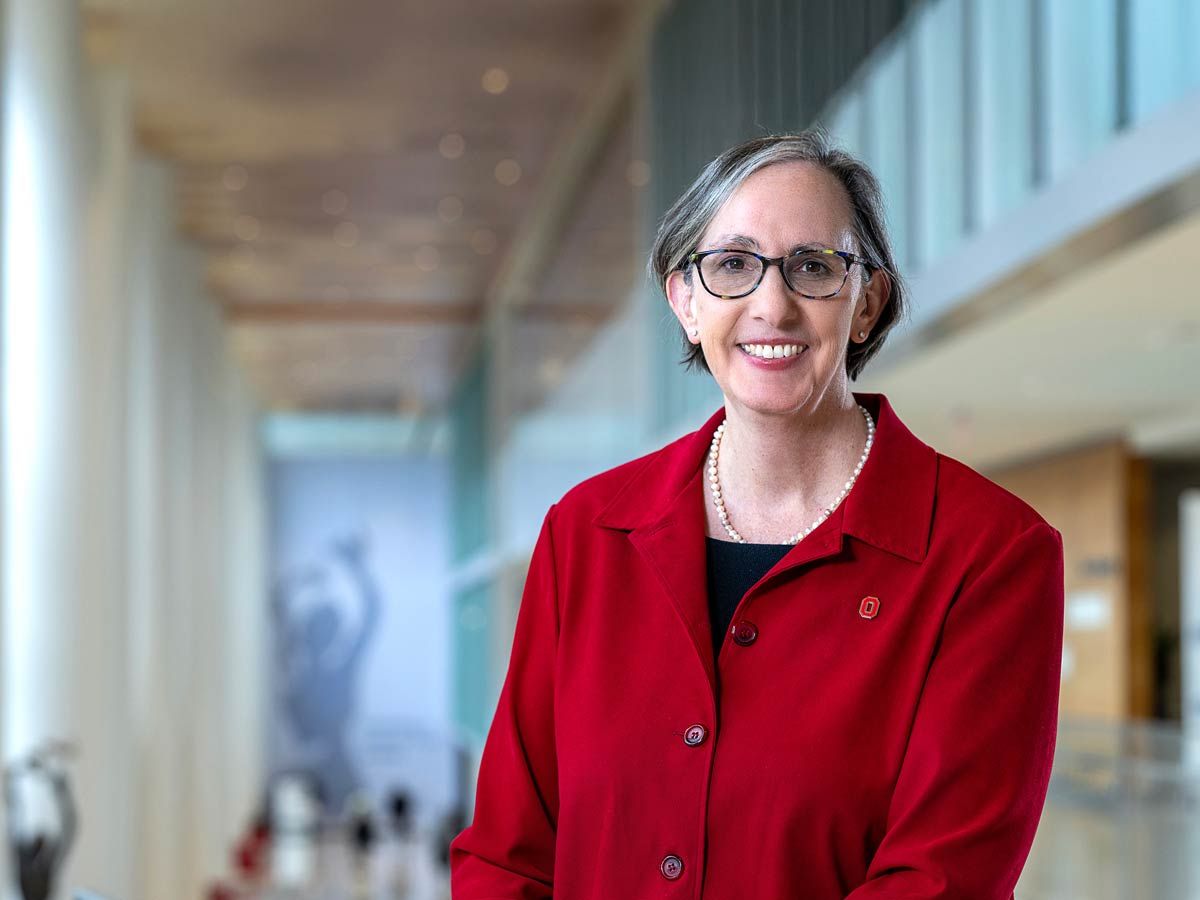
W. Kimryn Rathmell, MD, PhD, FASCO | Image Credit: © The Ohio State University Comprehensive Cancer Center
A Geographic Divide
In the modern landscape of oncology, a patient’s zip code can be as significant a factor in their survival as their genetic markers. The distance between a patient’s home and a specialized research center can be a matter of life or death. Approximately 19% of US households are designated as rural, Rathmell said, yet these areas face a significant survival disadvantage: 180 deaths per 100,000 population vs 157 deaths per 100,000 in urban areas.
A major contributor to this disparity is the centralization of clinical research. Currently, more than 20% of clinical research occurs in NCI-designated or academic centers, while only 4% happens in community-based programs, creating a disconnect where patients who most often could benefit from a trial are furthest from them. “There are far too many lives that are lost because of slowness of making the kind of progress that we all want,” she said.
To solve this, Rathmell argued for no longer viewing clinical trials as an “extra” service located only at university hospitals. Instead, she emphasizes the need for “making clinical research part of the standard of care” in every setting, a shift that requires bringing academic center expertise to communities leveraging technology to meet patients where they are.
The Dyad Model
At the heart of this transformation is the dyad model, a systematic approach that redefines the relationship between health care providers by forming a unified, dedicated team that integrates the expertise of academic specialists with the accessibility of community oncologists. The goal is to ensure that geography is not a prohibitive barrier that limits access to specialized expertise, but instead patients can move seamlessly between local care and academic consultation without losing their “trusted relationship” with their local physician.
Historically, patients have often been caught in a communication void between these 2 worlds. Rathmell points out that common barriers include patients “staying too long in academic centers” or experiencing significant “delays in seeking academic care” because the pathways are not clearly defined. The dyad model addresses this pitfall by establishing:
- Formal workflows for communication between community and academic sites
- Tracking mechanisms to monitor patient movement and ensure no one “falls through the cracks”
- Collaborative care plans where both the local doctor and the specialist work in tandem rather than in isolation.
Rathmell compared the model to a basketball team: “You can't play basketball if you don't have guards and forwards. And the guards and forwards have to play together, and they have to know what each other's roles are.” In this model, the patient serves as a full member of the team.
Decentralizing Research
Technology is the engine driving this new model of care. Rathmell highlighted the success of the NCI’s Virtual Clinical Trials Office, launched in 2024, which provides virtual staffing to smaller practices that lack the resources to run complex research programs.2 This initiative has so far facilitated 51,000 patient screenings across 19 protocols, allowing smaller, community-based practices to offer trials that were previously only available at major centers.
Even more revolutionary are nationwide telemedicine-enabled trials, such as a current study for FGFR-mutant pancreatic cancer. Because this mutation is rare, Rathmell said, opening physical sites across the country would be prohibitively expensive. Instead, patients are identified through genomic sequencing and screened remotely. If eligible, “we can ship the drug, because it's an oral drug, to their home, so that they can take that drug where they are.”
This approach removes the burden of travel and allows patients to participate in cutting-edge research, while drug delivery and routine monitoring occur locally with the patient’s own physician. This drastically reduces the cost and travel burden for the patient and allows researchers to study rare mutations across a larger, more diverse geographic footprint.
The need for coordinated, tech-forward care is underscored by the alarming rise in early-onset gastrointestinal cancers among younger populations, particularly pancreas and stomach cancers, Rathmell explained. These patients, typically aged 20 to 50 years, face unique challenges regarding fertility, psychological distress, and workplace management. Ohio State launched the Bridge Program in response, focusing on building research innovation and specialized care delivery for this demographic. By utilizing the dyad model, the program ensures that these young patients receive highly coordinated treatment plans and survivorship support.
The Path to Implementation
As oncology moves toward more personalized medicine, the need for coordinated, data-driven care becomes even more urgent. Transforming these concepts into standard practice requires policy reform, not just new clinical workflows. Rathmell called for a move toward multistate or national medical licensure for telehealth to facilitate nationwide enrollment in remote trials. Health care systems also must be able to navigate the financial and legal complexities of managing patient complications at distant sites, and this can be accomplished by developing standardized ways to manage complications that occur at distant sites and securing “new financial support strategies” to sustain these high-tech, high-touch models.
Without a national framework, enrolling a patient in a trial across state lines remains a complex legal challenge. Ultimately, the goal is to make “clinical research part of the standard of care landscape.” By leveraging the dyad model and virtual trial technology, the oncology community can meet science and patient needs where they intersect, ensuring that every patient—rural or urban—has a fair shot at the best possible outcome.
References
1. Rathmell WK, Fen M. Meeting patients with cancer where they are—the role of dyad partnerships in oncology. Presented at: American Society of Clinical Oncology Gastrointestinal Cancers Symposium; January 8-10, 2026; San Francisco, CA.
2. NIH to address dwindling clinical trial patient enrollment with centralized staffing support. News release. National Cancer Institute. February 29, 2024. Accessed January 10, 2026. https://www.cancer.gov/news-events/press-releases/2024/virtual-clinical-trials-office-launches


