

- Center on Health Equity & Access
- Clinical
- Health Care Cost
- Health Care Delivery
- Insurance
- Policy
- Technology
- Value-Based Care
Quality Improvement Program Dramatically Boosts Sleep Apnea Testing After Stroke in VA Hospitals
Quality improvement programs markedly increase sleep apnea testing in stroke patients, showing effective ways to improve guideline-based care.


Structured quality improvement led to an increase in sleep apnea diagnostic testing. | Image credit: JCP-PROD - stock.adobe.com
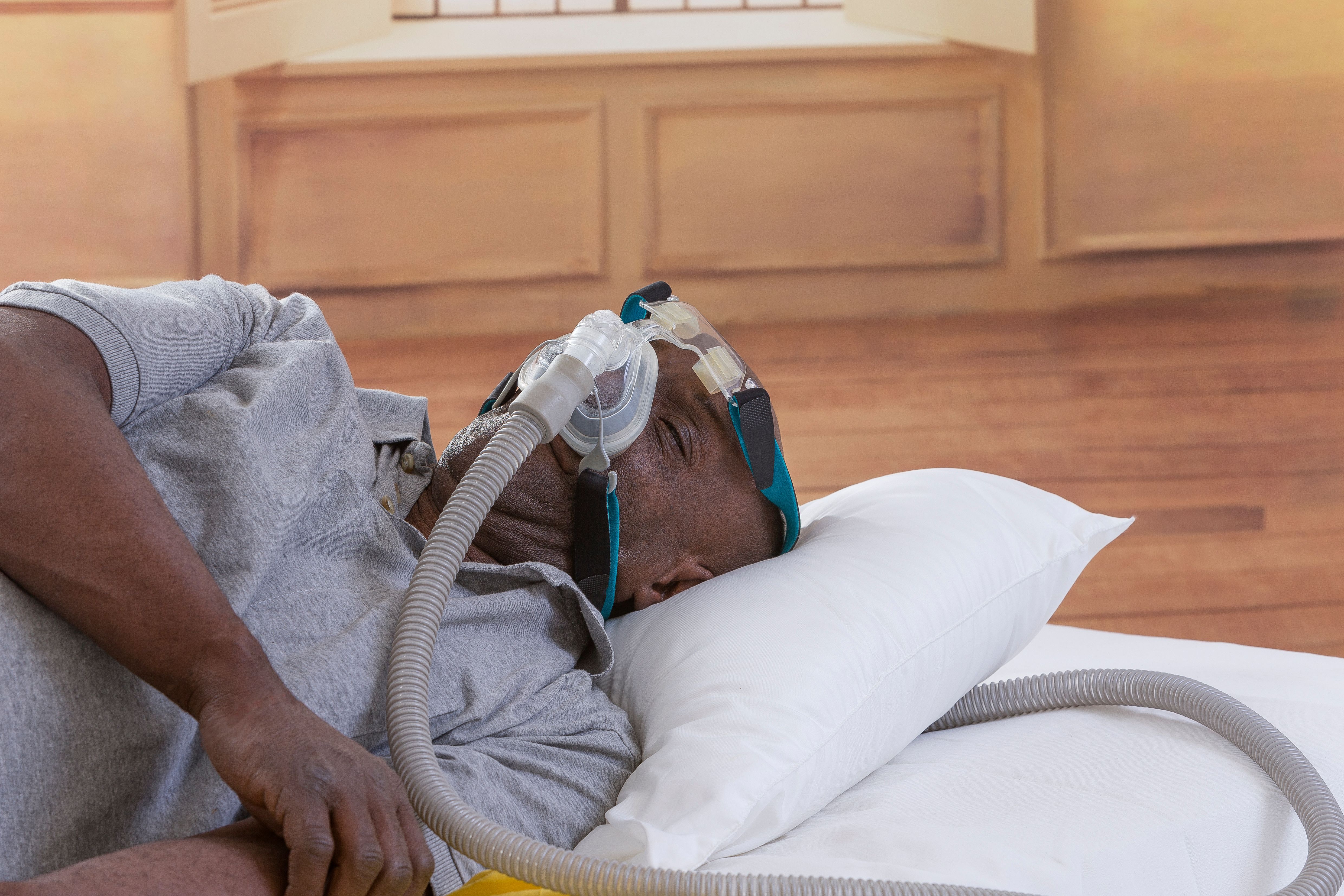
A structured quality improvement (QI) program led to a dramatic increase in sleep apnea diagnostic testing among patients hospitalized with acute ischemic stroke or transient ischemic attack (TIA) in a major Department of Veterans Affairs (VA) study.1 The stepped-wedge cluster randomized trial—one of the largest evaluations of inpatient sleep medicine implementation in stroke care—highlights how targeted operational strategies can close persistent gaps in guideline-recommended assessment of obstructive sleep apnea (OSA).
OSA: A Common, Underdiagnosed Stroke Risk
OSA is highly prevalent among patients with stroke and TIA and is associated with higher rates of recurrent vascular events, functional impairment, and readmission. About 70% of individuals hospitalized with ischemic stroke or TIA are affected by OSA.2 Despite guideline support for sleep testing after cerebrovascular events, most hospitals do not routinely screen or test these patients.1 Baseline testing rates within the VA system, for example, hovered around just 2%.
The study included 1747 patients across 6 intervention sites (mean age, 68.7 years; 93.5% male) and 7454 patients at 30 usual-care sites (mean age, 71.8 years; 95.4% male). Stroke was the index event in 81.8% of intervention-site patients and 79.6% of those in usual care. Outcomes were assessed across eight 7-month data periods between May 2019 and January 2024.
The QI intervention began with a virtual kickoff session. Site teams reviewed baseline performance, identified barriers to diagnosing OSA in acute stroke workflows, and created customized action plans. Teams participated in monthly collaborative meetings and used a web-based platform to access quality data, track progress, and share resources. External facilitation supported troubleshooting and solution development.
Testing Rates Increased More Than 10-Fold
At intervention sites, the 30-day OSA diagnostic testing rate increased from 2.1% (20/952) at baseline to 29.1% (189/650) during the 21-month active implementation period. This represents a more than 14-fold absolute increase and a 16-fold increase in odds of testing (adjusted OR, 16.90; 95% CI, 9.49–30.10).
Testing rates varied across intervention facilities, but all showed meaningful improvement. Baseline testing ranged from 0.6% to 4.2%, while active implementation rates ranged from 14.5% to 41.4%. By the third implementation period, the pooled testing rate across intervention sites reached 37.2% (74/199). Even after active facilitation ended, testing remained higher than at baseline, with a sustainability-phase rate of 11.7% (17/145) (adjusted OR, 3.58; 95% CI, 1.59–8.04).
By comparison, usual-care sites consistently reported testing rates between 0.7% and 2.2% throughout the study—essentially unchanged from their baseline.
Most sleep studies at intervention sites were limited-channel home sleep tests, typically NoxT3 or WatchPAT. Of 159 sleep studies completed, 70.4% to 72.8% identified sleep-disordered breathing. Importantly, 112 of 159 studies (70.4%) were completed during hospitalization, demonstrating the feasibility of inpatient testing workflows.
Rates of positive airway pressure initiation increased from 0.3% (3/952) at baseline to 2.8% (18/650) during implementation (OR, 14.22; 95% CI, 2.40–84.40). Usual-care sites saw treatment rates consistently at 0%–0.4%. No statistically significant changes occurred in 90-day readmissions or 90-day recurrent vascular events related to the study's secondary outcomes. Even if the intervention did have an effect on readmissions or vascular events, the study wasn't large enough or specifically designed to prove it statistically, a limitation noted by the authors.
A Scalable Path to Guideline-Concordant Stroke Care
The findings show that integrating inpatient sleep testing into acute stroke care is both feasible and effective when supported by structured quality improvement strategies. According to the authors, health systems aiming to improve guideline-concordant care for cerebrovascular patients may benefit from adopting similar models, particularly those that include collaborative learning, data feedback, and tailored action planning.
References
- Bravata DM, Perkins AJ, Myers LJ, et al. Quality improvement intervention to increase sleep apnea diagnostic testing after stroke and transient ischemic attack: a cluster randomized trial. JAMA Netw Open. 2025;8(11):e2543385. doi:10.1001/jamanetworkopen.2025.43385
- Seiler A, Camilo M, Korostovtseva L, et al. Prevalence of sleep-disordered breathing after stroke and TIA: a meta-analysis. Neurology. 2019;92(7):e648-e654. doi:10.1212/WNL.0000000000006904


