

- Center on Health Equity & Access
- Clinical
- Health Care Cost
- Health Care Delivery
- Insurance
- Policy
- Technology
- Value-Based Care
Low Awareness of HPV, Vaccine Availability, and Cancer Link Persists Nationwide
Public awareness of human papillomavirus (HPV) and its link to cervical and oral cancers is alarmingly low in the US, especially in the Midwest and South.
Public awareness about human papillomavirus (HPV), HPV vaccination, and the link between HPV and cancer remains overwhelmingly low in the US, especially in Midwestern and Southern states, according to a research letter published in JAMA Oncology.1
An estimated 48,000 new cases of HPV-associated cancers are diagnosed each year nationwide, with nearly 62% occurring in the Midwest and South.2,3 HPV is known to cause 6 types of cancer: anal, cervical, oropharyngeal, penile, vaginal, and vulvar.4
Because awareness is a “key psychosocial factor” influencing the public’s adherence to preventive measures like vaccination, the researchers conducted a study to assess knowledge of HPV, HPV vaccination, and HPV's association with cancer nationwide, particularly cervical and oral cancers.1


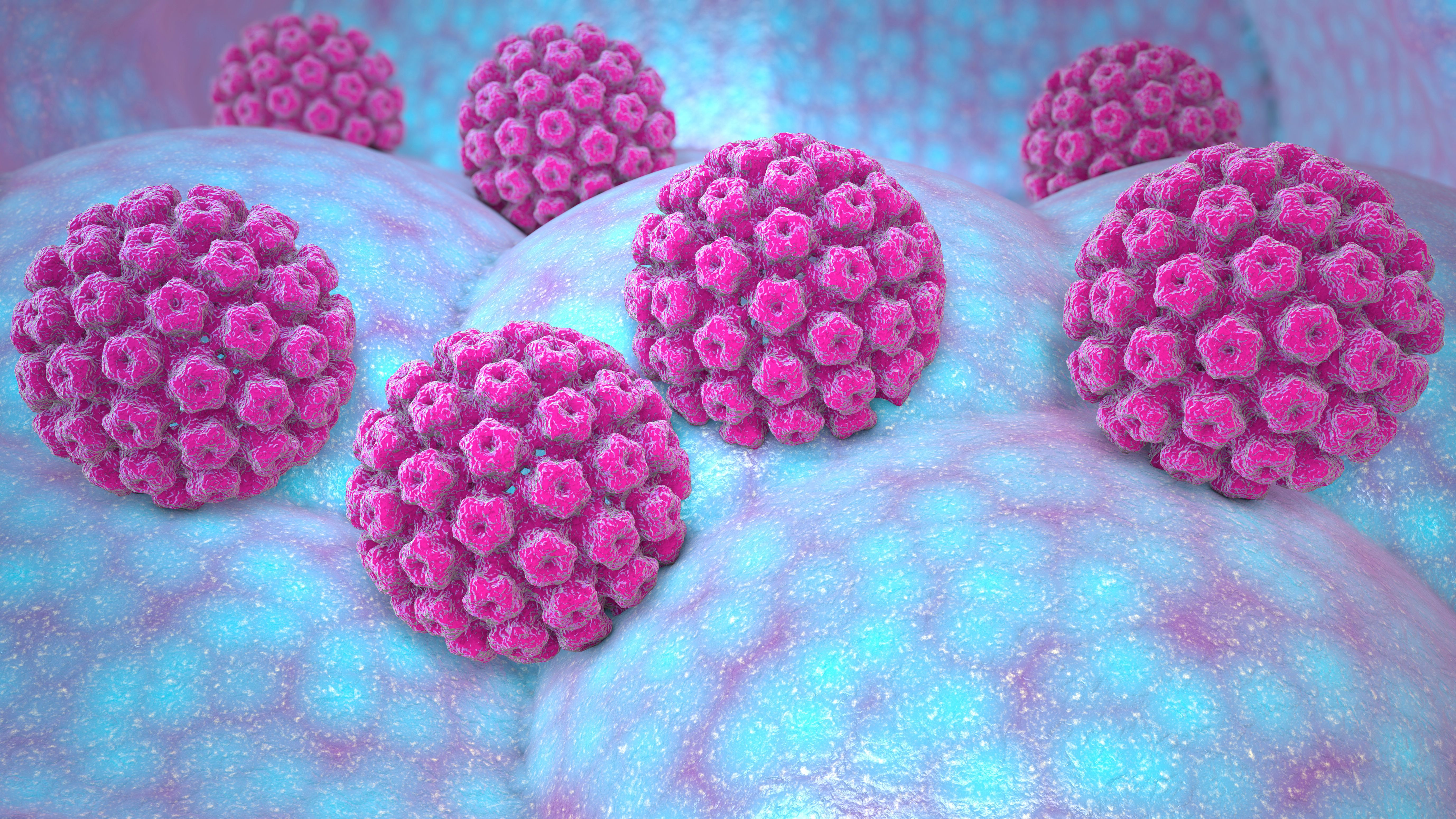
Public awareness of human papillomavirus (HPV) and its link to cervical and oral cancers is alarmingly low in the US, especially in the Midwest and South. | Image Credit: Naeblys - stock.adobe.com
The researchers analyzed responses from 22,344 adults aged 18 and older in cycles 1 through 5 of the 2017-2020 Health Information National Trends Survey (HINTS) and cycle 6 of the 2022 HINTS. Most participants (51.1%) were female, with a mean age of 49 years.
Participants were asked whether they had heard of HPV and the HPV vaccine. Those who had heard of HPV were also asked whether they believed HPV causes oral or cervical cancer. The researchers considered participants who responded “no” or “not sure” to be unaware of HPV, the HPV vaccine, and that HPV causes cancer.
Nationwide, 34.3% (95% CI, 33.2%-35.4%) were unaware of HPV, and 37.6% lacked awareness of the HPV vaccine (95% CI, 36.5%-38.8%). The lack of HPV awareness exceeded 40% in 7 states, mainly in the Midwest (Kansas, Nebraska, and Illinois) and the South (Mississippi, Arkansas, and Alabama). Similarly, more than 40% of individuals across 13 states were unaware of the HPV vaccine, including 9 states across the Midwest (South Dakota, Kansas, and Illinois) and the South (Alabama, Arkansas, Florida, Oklahoma, South Carolina, and Mississippi).
The researchers noted that these findings are “troubling,” as these regions have recently seen a rise in HPV-associated cancers and related deaths.5 Low HPV vaccine awareness is especially concerning in the Midwest and South, where vaccination rates are already suboptimal.1
Additionally, significant knowledge gaps remain among those aware of HPV. Specifically, 70.8% (95% CI, 69.2%-72.3%) and 28.3% (95% CI, 27.0%-29.6%) were unaware that HPV causes oral and cervical cancers, respectively. The researchers suggested that the disparity may reflect the long-standing focus on cervical cancer in screening and early vaccine campaigns, while oral cancer has received less public attention.
Lastly, they acknowledged the study's limitations, including its cross-sectional design, which prevents causal inferences. However, they expressed confidence in their findings, which support the need for targeted educational efforts.
“…given the importance of timely HPV vaccination and the risk of early-life exposure, there is a critical need to enhance HPV awareness among adolescents, young adults, parents or caregivers, and pediatric and adult health care professionals,” the authors concluded.
References
- Garg A, Damgacioglu H, Graboyes EM, Seal S, Deshmukh AA, Sonawane K. State-level public awareness of HPV, HPV vaccine, and association with cancer. JAMA Oncol. Published online August 14, 2025. doi:10.1001/jamaoncol.2025.2638
- Cancers linked with HPV each year. CDC. June 11, 2025. Accessed August 18, 2025. https://www.cdc.gov/cancer/hpv/cases.html
- Liao CI, Francoeur AA, Kapp DS, Caesar MAP, Huh WK, Chan JK. Trends in human papillomavirus-associated cancers, demographic characteristics, and vaccinations in the US, 2001-2017. JAMA Netw Open. 2022;5(3):e222530. doi:10.1001/jamanetworkopen.2022.2530
- HPV and cancer. National Cancer Institute. Accessed August 18, 2025. https://www.cancer.gov/about-cancer/causes-prevention/risk/infectious-agents/hpv-and-cancer#what-cancers-are-caused-by-hpv-infection
- Shaw ML. Cervical cancer mortality gap widens between rural and urban areas. AJMC®. March 3, 2025. Accessed August 18, 2025. https://www.ajmc.com/view/cervical-cancer-mortality-gap-widens-between-rural-and-urban-areas


