

- Center on Health Equity & Access
- Clinical
- Health Care Cost
- Health Care Delivery
- Insurance
- Policy
- Technology
- Value-Based Care
ICYMI: Highlights From the American College of Cardiology
Semaglutide, sotatercept, and bentracimab trials were attendees’ main focus at the American College of Cardiology 2025 Annual Scientific Session.
ZENITH, SOUL, and REVERSE-IT were just a few of the key trials presented at the American College of Cardiology 2025 Annual Scientific Session (ACC.25).
The March 2025 meeting covered a wide array of cardiometabolic and pulmonary vascular care advancements, from sotatercept’s impact in high-risk pulmonary arterial hypertension (PAH) to oral semaglutide becoming the first glucagon-like peptide-1 (GLP-1) pill to demonstrate cardiovascular benefit. Positive findings on a first-in-class ticagrelor reversal agent were also presented at the meeting, where experts discussed new research in peripheral artery disease and ischemia with nonobstructive coronary arteries (INOCA).
Here are the top 5 articles and interviews from ACC.25. You can view more of our coverage and interviews from the meeting here.
5. ZENITH Trial Findings Could Reshape PAH Treatment, Extending Sotatercept’s Reach
Marc Humbert, MD, PhD, lead author of the ZENITH trial, described the study’s findings comparing sotatercept with placebo in patients with PAH. He noted that this was the first time a phase 3 PAH trial was halted for efficacy at interim analysis, and explained that ZENITH may support expanding sotatercept’s regulatory label to include patients with advanced PAH and high mortality risk. Additional studies are underway to evaluate its role earlier in disease progression and across the full spectrum of PAH severity.
Check out the interview here.
4. Sotatercept Reduces Risk of Death, Transplant, or Hospitalization in Advanced PAH
The phase 3 ZENITH trial showed that sotatercept reduced the risk of death, lung transplantation, or prolonged hospitalization by 76% in high-risk adults with PAH despite maximal background therapy. At a median follow-up of 10.6 months, about 17% of patients on sotatercept experienced serious events compared with nearly 55% on placebo, leading the trial to stop early for efficacy. The trial also demonstrated large reductions in death, transplant, and PAH-related hospitalizations with sotatercept, and safety findings aligned with prior research.
Read the full findings here.


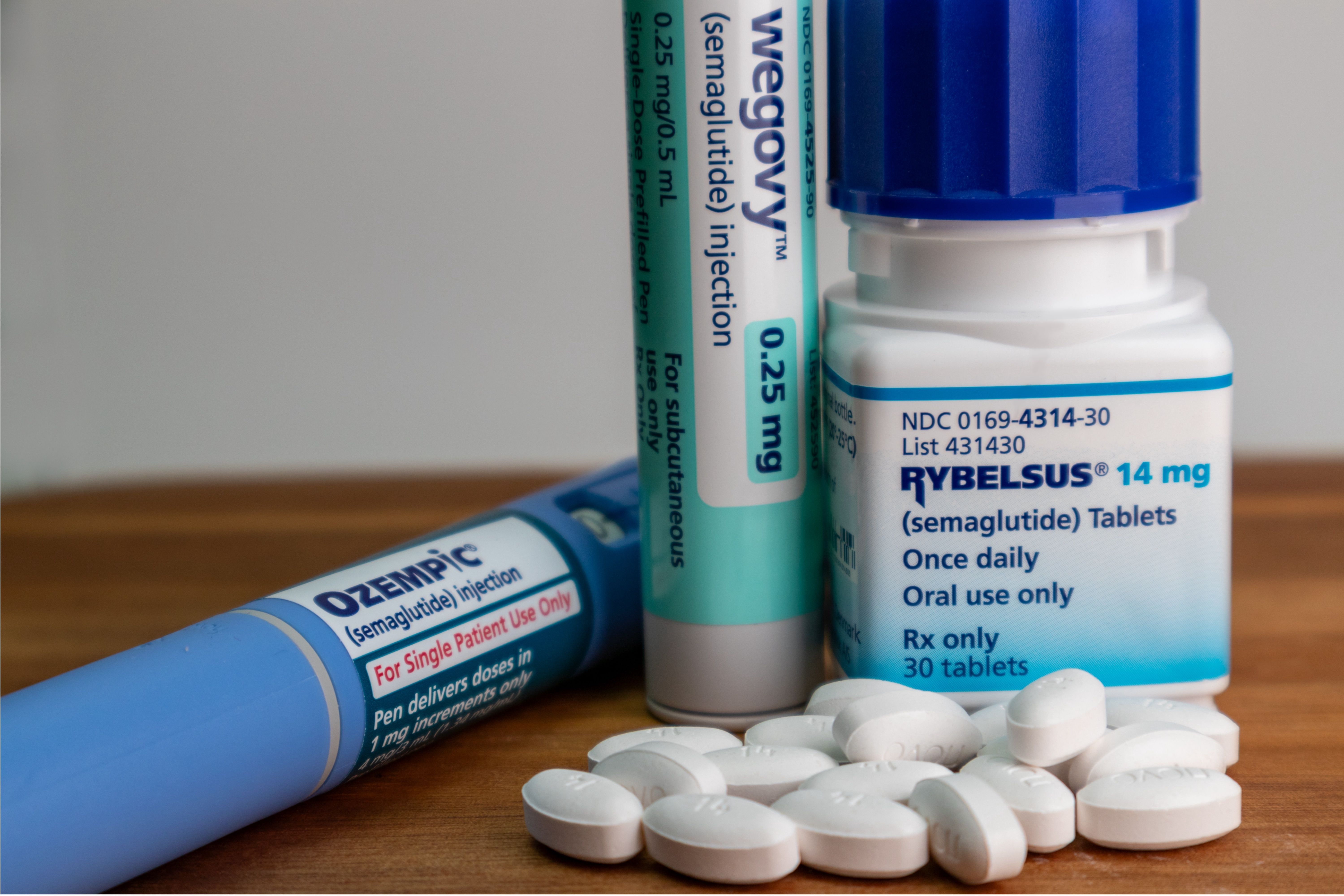
Oral semaglutide was the first oral GLP-1 to demonstrate cardiovascular efficacy in trials. | Image credit: K KStock – stock.adobe.com
3. Oral Semaglutide Cuts Cardiovascular Risk by 14% in SOUL Trial
The phase 3 SOUL trial found that oral semaglutide reduced major adverse cardiovascular events by 14% over nearly 4 years, driven by a 26% reduction in nonfatal heart attacks. This made oral semaglutide the first oral GLP-1 receptor agonist to demonstrate cardiovascular efficacy, expanding treatment options for patients unwilling or unable to use injectable therapies. Researchers said the pill’s cardiovascular benefits were consistent across age, sex, and comorbidity subgroups, and that it was used safely alongside SGLT2 inhibitors.
Read the full findings here.
2. Ticagrelor Antidote Bentracimab Safely Reverses Antiplatelet Effects in Phase 3 REVERSE-IT Trial
The phase 3 REVERSE-IT trial showed that bentracimab rapidly and safely reversed ticagrelor’s antiplatelet effects in patients needing urgent surgery or experiencing major bleeding. Within minutes of infusion, platelet function began returning to normal, and more than 91% of patients achieved full restoration within 30 minutes. Overall, 94.3% of patients achieved effective clotting and vessel repair, including 83.1% of those with major bleeding. No allergic reactions or treatment-related discontinuations were reported.
Read the full study findings here.
1. High-Impact Trials at ACC.25 Signal Shift in Chronic Disease Treatment
Experts at ACC.25 highlighted several major advances in cardiometabolic care, including new data for oral semaglutide and emerging therapies for peripheral artery disease and INOCA. They also talked about how GLP-1 receptor agonists and SGLT2 inhibitors are expanding benefits across diabetes, heart failure, atherosclerosis, and kidney disease. During the March 2025 meeting, leaders described the moment as an inflection point, with evidence-based therapies poised to reshape long-term disease management.
Hear what they had to say here.


What It Takes to Improve Guideline-Based Heart Failure Care With Ty J. Gluckman, MD
August 5th 2025Explore innovative strategies to enhance heart failure treatment through guideline-directed medical therapy, remote monitoring, and artificial intelligence–driven solutions for better patient outcomes.
Listen


Personalized Care Key as Tirzepatide Use Expands Rapidly
April 15th 2025Using commercial insurance claims data and the US launch of tirzepatide as their dividing point, John Ostrominski, MD, Harvard Medical School, and his team studied trends in the use of both glucose-lowering and weight-lowering medications, comparing outcomes between adults with and without type 2 diabetes.
Listen


