

- Center on Health Equity & Access
- Clinical
- Health Care Cost
- Health Care Delivery
- Insurance
- Policy
- Technology
- Value-Based Care
ICE Presence in Minnesota Health Care Settings Threatens Access to Essential Medical Care
Minnesota physicians warn ICE activity in hospitals and clinics is deterring care, undermining patient safety, and worsening health outcomes.
Minnesota physicians convened last week to address the actions of US Immigration and Customs Enforcement (ICE) officers inside and around hospitals, clinics, and health care centers, which they say are illegal and threaten access to essential medical care.1
The press conference held on January 20 highlighted patient experiences and the negative impact ICE agents’ presence has on the health and well-being of the Hispanic/Latino and Somali communities living in Minnesota, and more specifically, Minneapolis. During the press conference, physicians described widespread fear and loss of agency among hospital staff trying to protect and care for their patients.1 ICE agents have been seen camping outside of hospitals and clinics, waiting for patients to enter or exit, and questioning them about their legal status. The physicians said that ICE agents’ tactics are based on racial profiling and have been targeting patients who appear to be of Latin descent. Now, patients in fear for their safety are choosing to forgo necessary medical care.


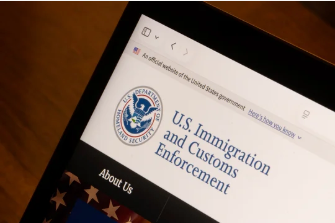
Minnesota clinicians say ICE enforcement near hospitals and clinics is discouraging patients from seeking critical medical care. | Image Credit: @TadaImages - stock.adobe.com
“Policies that infringe on the health and rights of immigrants and limit access to healthcare, anti-immigrant rhetoric, and punitive immigration enforcement activities all have detrimental effects on health,” said Erin Stevens, MD, legislative chair for the Minnesota section of the American College of Obstetrics and Gynecologists. “In my personal experience and that of many of my colleagues providing care in our state, we are deeply troubled by what we have seen.”
Fourth Amendment Guidance Clarifies What ICE Can and Cannot Do
In response to the ICE raids, the Minnesota Attorney General’s Office released clear guidance to aid organizations that manage sensitive locations like medical facilities, schools, churches, courts, and shelters.2 Hospitals’ protections that prohibited ICE agents from enforcement actions implemented by the Department of Homeland Security (DHS) under the Biden administration were rescinded shortly after President Donald J. Trump was sworn into office in January 2025.2
Although ICE agents can access public spaces such as hospital waiting rooms or lobbies, the Minnesota Attorney General’s Office guidance states clear rules cataloguing private vs public spaces under the Fourth Amendment. Patients’ hospital rooms, as exemplified in a Florida Supreme Court case in 1994, should be treated as a private space under the Fourth Amendment—protecting people’s rights to “unreasonable searches and seizures.”2
“There are reports of ICE agents refusing to leave the room for private exams or while patients are getting bed baths,” said Lisa Mattson, MD, president of the Minnesota Medical Association, during the press conference. “Their mere presence in the emergency departments makes a difficult job even more stressful for all the staff, thus interfering with patient care.”
Research Shows Unregulated Law Enforcement Presence Undermines Care
Unregulated law enforcement presence in emergency departments (EDs), especially those that treat marginalized communities, negatively impacts patients’ safety, dignity, and healing.3 In a recent study, researchers interviewed multiple stakeholders in the ED, including survivors of violence (SOV), hospital-based violence intervention program representatives, and local law enforcement officers. A qualitative analysis of stakeholder responses concluded that all parties agreed on limiting or triaging interactions between SOV and law enforcement, formalizing hospital and law enforcement training and policies, and integrating advocates for survivors in the ED.3,4
“This alignment, or this shared recognition, creates a real opportunity for change that is both patient-centered and operationally feasible, balancing the critical needs and priorities of safety, recovery, and operational needs in the ED,” said the lead study author, Prashasti Bhatnagar, Esq., MPH, a law fellow at the Urban Institute-Georgetown Law project.
Policy regulation of law enforcement in and around the ED, hospitals, and health care spaces can be associated with improved patient care and healing.3-5 However, it is unclear whether and how such regulations will be enforced, especially in the context of ICE officers who have been disregarding laws and policies.
Numerous states have passed legislation intended to protect patients in hospitals and health centers. Colorado passed a bill penalizing hospitals for sharing unauthorized patient information with federal ICE officers regarding a patient’s citizenship status. Other states have also passed legislation barring ICE agents from entering private areas in medical facilities.
However, many ICE agents continue with illegal searches and seizures of private areas under the order of an administrative warrant, usually signed by an ICE administrative official. These warrants do not allow ICE agents to enter private areas without permission, unlike a federally issued warrant signed by a judge, which is rarely issued in immigrant cases.2,6
“Ultimately, the goal is to put clear policies and practices in place that can help ensure that EDs provide patients with safety, dignity, and trauma-informed care,” Bhatnagar said.
ICE Activity Is Directly Impeding Access to Medical Care
“In our clinic parking lot, a mother and a son were forcefully separated while trying to fill a prescription for a seizure medication. The trauma triggered a medical crisis,” said Roli Dwivedi, MD, a family physician and immediate former president of the Minnesota Academy of Family Physicians, during the press conference. “The son was rushed to the hospital in the midst of a seizure, whilst his mother was sent to a detention center in Texas. In Wilmer, Minnesota, fear is paralyzing the community.”
Minnesota physicians continued to describe what they witnessed: pictures of families being torn apart in clinic parking lots, parents risking their freedom to seek help for their sick children, and expecting mothers missing prenatal appointments for fear of being detained.
“A pregnant mother missed her checkup and stopped answering her phone,” Dwivaldi said. “A nurse went to her home and found her 8 centimeters dilated, laboring alone and terrified to seek help.”
In Minnesota, several clinics have reported no-show and cancellation rates as high as 60%, Dwivedi said.
“This means that acute and chronic illnesses are not being managed properly, and it increases the likelihood that these individuals will end up seeking emergency care,” Mattson said.
ICE Enforcement and Health Care Avoidance Are National Issues
These fears have persisted outside of Minnesota long before the Trump administration’s sweeping immigration crackdown.6 In early January, the Trump administration launched the largest federal immigration enforcement operation in American history, responding to alleged childcare fraud among Somali day care centers in Minnesota.
Before that, when Trump took office in January 2025, nearly 8 in 20 likely undocumented immigrants surveyed said they had experienced at least 1 of the following: (1) increased stress, anxiety, or sadness; (2) problems sleeping or eating; or (3) worsening health conditions.7
“In primary care, we see firsthand that when people delay or avoid care, the harm compounds: chronic conditions worsen, injuries go untreated, preventable complications grow more serious,” Dwivedi said. “When a clinic like this is treated like a tactical zone, who would feel safe enough to go to the health care facility?”
References:
1. Watch: Minnesota physicians on ICE presence in hospitals. ABC 6 News. January 20, 2026. Accessed January 23, 2026. https://www.kaaltv.com/news/watch-minnesota-physicians-on-ice-presence-in-hospitals/
2. The Attorney General’s Office releases guidance regarding federal immigration policy for organizations maintaining sensitive locations. The Office of Minnesota Attorney General. May 2, 2025. Accessed January 23, 2026. https://www.ag.state.mn.us/Office/Communications/2025/05/02_PublicGuidance.asp
3. McCrear S, Bhatnagar P. How ED policies can better protect survivors of violence: a Q&A with Prashasti Bhatnagar, Esq, MPH. AJMC. January 23, 2026. Accessed January 23, 2026. https://www.ajmc.com/view/how-ed-policies-can-better-protect-survivors-of-violence-a-q-a-with-prashasti-bhatnagar-esq-mph
4. McCrear S. Law enforcement in EDs: impacts on survivors of violence, marginalized communities. AJMC. January 13, 2026. Accessed January 26, 2026. https://www.ajmc.com/view/law-enforcement-in-eds-impacts-on-survivors-of-violence-marginalized-communities
5. Bhatnagar P, Ramdath C, Pinto D, Hall E. Navigating law enforcement presence in emergency departments. JAMA Netw Open. 2026;9(1):e2551804. doi:10.1001/jamanetworkopen.2025.51804
6. Boyd-Barrett C. California faces limits as it directs health facilities to push back on immigration raids. KFF Health News. October 30, 2025. Accessed January 27, 2026. https://kffhealthnews.org/news/article/california-ice-immigrant-protections-hospitals-clinics-agents/
7. Pillai D, Artiga S, Pillai A, et al. KFF/New York Times 2025 survey of immigrants: health and health care experiences during the second Trump administration. KFF. November 18, 2025. Accessed January 23, 2026. https://www.kff.org/immigrant-health/kff-new-york-times-2025-survey-of-immigrants-health-and-health-care-experiences-during-the-second-trump-administration/


