

- Center on Health Equity & Access
- Clinical
- Health Care Cost
- Health Care Delivery
- Insurance
- Policy
- Technology
- Value-Based Care
CCCA Associated With Longer Time to Diagnosis Vs Other Scarring Alopecias
Central centrifugal cicatricial alopecia (CCCA) faces significant diagnostic delays, highlighting the need for increased awareness and education among providers.
Patients with central centrifugal cicatricial alopecia (CCCA) experience significantly longer delays between symptom onset and diagnosis compared with patients who have other forms of scarring alopecia, according to an analysis published in JAAD International.1 The findings highlight persistent diagnostic challenges that may contribute to irreversible hair loss and underscore the need for greater awareness among both clinicians and patients.


The findings reinforce the need for earlier recognition of scarring alopecias—particularly CCCA—and improved education for clinicians. | Image Credit: cattyphoto - stock.adobe.com
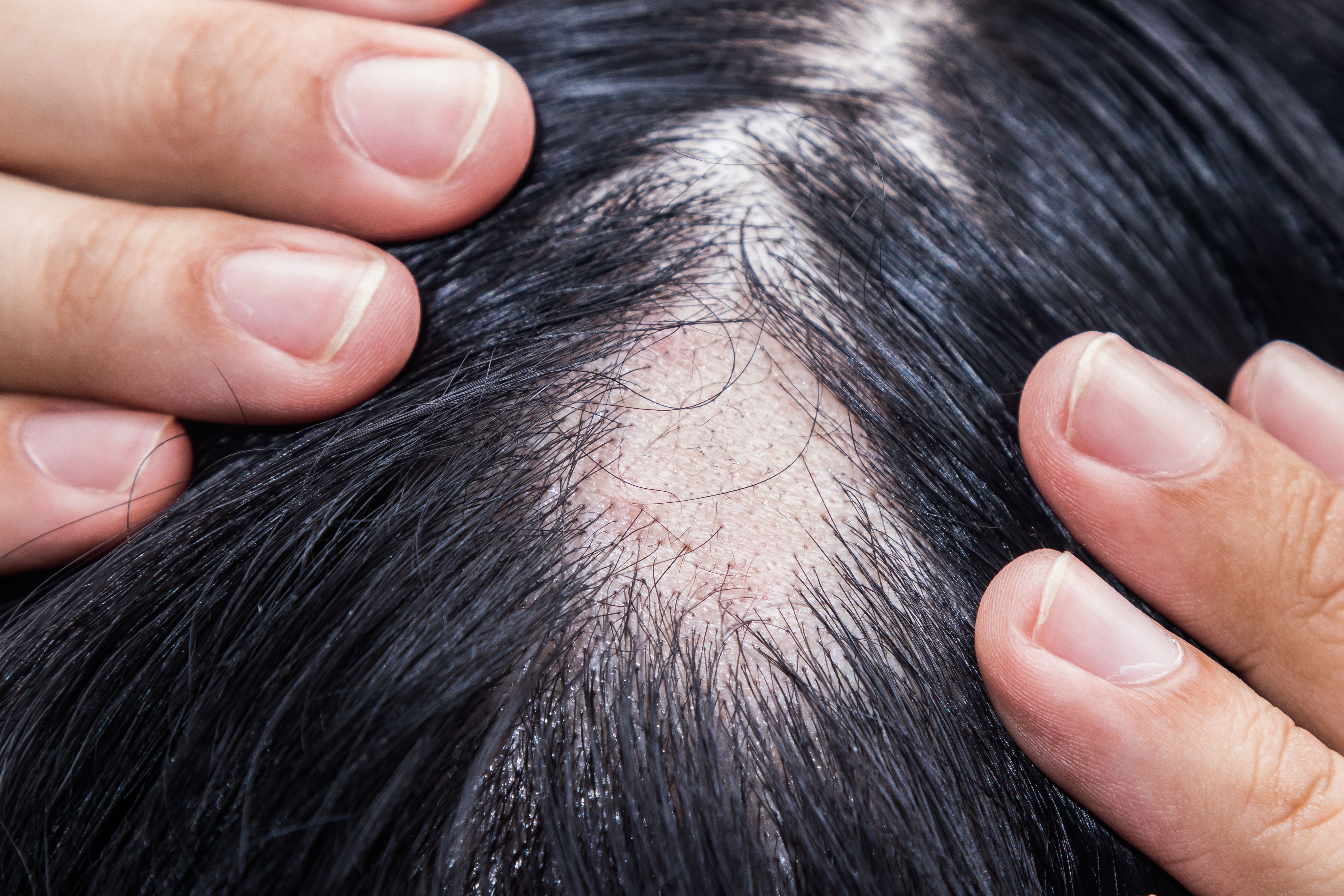
Scarring alopecias are a group of inflammatory hair disorders characterized by permanent destruction of hair follicles.2 Because hair loss is irreversible once follicles are damaged, early diagnosis and treatment are critical to slowing disease progression and managing symptoms.1 However, timely diagnosis remains difficult, particularly for CCCA.
The study analyzed data from the Cicatricial Alopecia Patient Assessment & Impact Report, a survey distributed by the Scarring Alopecia Foundation that included responses from more than 1000 patients. Researchers examined associations between time to diagnosis (TTD)—defined as the interval between reported symptom onset and formal diagnosis—and factors such as alopecia subtype, race, income, and insurance status.
After excluding respondents with incomplete or inaccurate timeline data, the final analysis included 1034 participants. Overall, the mean TTD across all scarring alopecias was 3.54 years. However, patients with CCCA experienced substantially longer delays, with a mean TTD of 5.67 years, compared with 2.88 years for patients with frontal fibrosing alopecia (FFA) or lichen planopilaris (incidence rate ratio [IRR], 1.97; P < .0001).
In univariate analyses, Black patients had significantly longer diagnostic delays than White patients (5.47 years vs 2.87 years, respectively [IRR, 1.91; P < .0001]). Higher income was associated with shorter TTD, suggesting socioeconomic factors may influence access to specialty care or timely evaluation. However, when researchers adjusted for multiple variables simultaneously, only alopecia subtype remained a statistically significant independent predictor of diagnostic delay, with CCCA associated with nearly double the time to diagnosis compared with other scarring alopecias.
The authors noted that race and income may still play an important role, even though they did not remain significant in the multivariable model. Interactions between variables can reduce statistical power, and CCCA itself is strongly associated with Black patients. In this cohort, 84% of patients with CCCA identified as Black, reinforcing the intersection between disease subtype and racial disparities.
“Overall, these diagnostic delays may result from challenges in diagnosing CCCA, which can mimic traction alopecia and seborrheic dermatitis and have atypical presentations,” the authors explained. “Histopathologic overlap among lymphocytic [scarring alopecia] further complicates diagnosis. Limited awareness among primary care providers as well as patients themselves may contribute.” Patient-level barriers such as distrust of the health care system or perceptions of inadequate understanding of Afro-textured hair may also play a role.
The authors noted study limitations, including reliance on self-reported survey data, which introduces the potential for recall bias. In addition, participants were drawn from a patient advocacy group and were more likely to be insured, higher-income, and White, limiting generalizability to broader populations.
Despite these limitations, the findings reinforce the need for earlier recognition of scarring alopecias—particularly CCCA—and improved education for clinicians who serve at-risk populations.
“Patients with [scarring alopecia] are diagnosed several years after symptom onset,” the authors concluded. “[Scarring alopecia] type (CCCA), not race, income, or insurance, was the only independent predictor of longer TTD. Black race remains an important consideration due to its strong association with CCCA. Increased awareness and education among patients and providers may improve timely referrals to dermatology.”
References
1. Issa T, Klomhaus AM, Kasakevich C, Pickford J, Goh C. Central centrifugal cicatricial alopecia is associated with longer time to diagnosis among scarring alopecias. JAAD Int. 2025;24:335-337. doi:10.1016/j.jdin.2025.11.021
2. Al Aboud AM, Syed HA, Zito PM. Alopecia. In: StatPearls. StatPearls Publishing; January 2025-. Accessed January 23, 2026. https://www.ncbi.nlm.nih.gov/books/NBK538178/


Specialty and Operator Status Influence Electronic Health Record Use Variation
January 22nd 2026Operators demonstrated specialty-specific differences in electronic health record efficiency, timeliness, and after-hours use, highlighting how workflow and training shape documentation behaviors across medical disciplines.
Read More


Subjective and Objective Impacts of Ambulatory AI Scribes
January 8th 2026Although the vast majority of physicians using an artificial intelligence (AI) scribe perceived a reduction in documentation time, those with the most actual time savings had higher relative baseline levels of documentation time.
Read More

