

- Center on Health Equity & Access
- Clinical
- Health Care Cost
- Health Care Delivery
- Insurance
- Policy
- Technology
- Value-Based Care
Bridging the Academic-Community Gap in Cancer Care: Andrew Yee, MD
Andrew Yee, MD, explains how academic centers can share practical oncology best practices that community hospitals can implement sustainably.
Best practices for cancer care must be practical and easily operationalized, especially for community hospitals with fewer resources, Andrew Yee, MD, clinical director of the Center for Multiple Myeloma at Massachusetts General Hospital, told The American Journal of Managed Care® (AJMC®).
In this interview, Yee, who participated in a panel at AJMC’s Boston Regional Institute for Value-Based Medicine® event on February 5, spoke about how major medical academic centers can translate best practices into a community oncology setting.


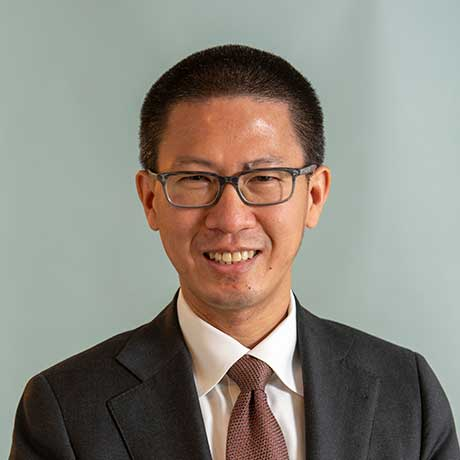
Andrew Yee, MD, discusses translating resource-intensive academic oncology advances, like bispecific antibodies, into community practice through communication and trust. | Image credit: @Massachusettes_General_Hospital.jpeg
This transcript was lightly edited for clarity.
AJMC: What distinguishes academic best practices that successfully carry over into community practice from those that struggle to take hold—and what drives that difference?
Yee: At the end of the day, you want these best practices to be as easily introduced and operationalized as possible. I think academically, when we talk about practices, you have to be practical, and I think our partners appreciate that. Major medical centers can have more resources and more staffing compared to community hospitals, which may not have as many resources. We have to come up with practices that are simple, straightforward, and easy to apply.
When we think about taking care of cancer patients, we have to think about how most of our patients are in the community and how we can make recommendations as universally applicable as possible. I do acknowledge that there are some forms of care that are resource-intensive that would only be available at a major medical center. For example, really complex, multidisciplinary-type operations would probably be restricted to a major medical center. But ultimately, I think you have to think about something that's practical for the community as well.
AJMC: How are academic practices or services adapted effectively into a community oncology environment?
Yee: If there's a therapy or treatment regimen that's effective, then it will speak for itself. The community practices will be quicker to adopt if they can see the efficacy in it, if they can see the juice is worth squeezing, so to speak. Some examples of this would be in multiple myeloma; for newly diagnosed patients, we're thinking more and more about 4-drug regimens that incorporate an anti-CD38 antibody, and as a community and as more oncologists appreciate its value as beneficial, then I think community practices are more likely to adopt it quicker.
A second example would be, and I think this is more timely, using bispecific antibodies, and right now, bispecific antibodies are approved across 3 different tumor types. I focus on multiple myeloma, so they're used to multiple myeloma, but they're also used in lymphoma, and there's 1 that's used in small cell lung cancer. And right now, they're mainly being used in major medical centers. And the hope is that over time, community sites will be able to adopt them.
I think once community sites see that these drugs can be transformational—and also how, right now, the approval for these, for example, for multiple myeloma, is in 4 prior lines of therapy—and in the near future, that these drugs could be approved in 1 to 3 prior lines of therapy, there are going to be even more patients where this is applicable to. Once they see that, in order to adequately provide care for their patients, I think there will be a natural impetus for community practices to think about how they can implement them into their practice.
AJMC: What role do trust and established relationships play in making academic–community collaboration work well for oncology patients?
Yee: I think a lot of it's about communication between everybody involved. I think that's true for anything in life where you have to have open lines of communication. We all work with our colleagues in the community, and I think they're the key to the success of any therapy for our patients.
Having an open line of communication and being accessible is really helpful because I think about the colleagues who work with the community and how we email and text with each other. That makes having a specific point person really helpful, especially when you're having a challenging patient or when you have a new therapy and are trying to implement that into the community.
AJMC: As cancer treatments become more complex, what kinds of support from academic centers help community practices feel prepared to provide them?
Yee: I think there's an appreciation in multiple myeloma care because how we actually give the treatment doesn't necessarily resemble the clinical trial exactly; it doesn't necessarily resemble the prescribing information. I can think of plenty of examples where how we take care of these patients doesn't match, and I think that creates a source of frustration.
I see it in myeloma all the time; I think about it 24/7, whereas if you're dealing with multiple tumor types, that's not something you think about all the time. And the onus is on the major medical to provide practical tips and say, “These are the things you have to watch out for. This is the schedule. This is the practical schedule that we use for our patients,” and trying to make it as simple as possible.
I think for people in busy practices, you don't have time to necessarily dig through the fine print. And the pharmaceutical partners may be limited in terms of how much they can communicate in terms of the actual practical aspects of delivering this treatment.
AJMC: What is your vision for the ideal academic–community ecosystem that enables high-level cancer treatment closer to home, and what key actions are needed to build it?
Yee: A lot of it's about establishing the partnerships between community physicians and physicians at a major medical center. I think once you have these lines of communication that are open between all the parties involved, I think everything will flow organically from there. Again, I think about something that we're dealing with in 2026, which is in multiple myeloma, are these bispecifics, and we're thinking about how we effectively partner with our community oncologists in using these drugs.
However, some of the challenges with using these drugs are realizing that there are multiple parties involved in terms of thinking about when these patients show up in the emergency room; it's not just the oncologists who take care of these patients. Think about emergency physicians in the emergency department; they have to be aware that this is a new type of therapy because I think in emergency therapy, they're already aware of febrile neutropenia, and that's something they know how to use because they're on the front lines.
I think about how they have to be ready to see patients who may have, say, cytokine release syndrome or neurotoxicity, as these drugs become more available to the community. It's not just about the community oncologists, but it's also about the community hospitals, thinking about people in the emergency department, and thinking about potentially less likely people in the low-intensive care unit. I think engaging those people across those domains will be important as well.


New Bill Makes CMS Enforcer in PBM, Pharmacy Relationship: A Q&A With Jesse Dresser, Esq
February 11th 2026The Consolidated Appropriations Act of 2026 gives CMS more leverage to intercept when pharmacy benefit managers are driving up prices in Medicare Part D, explains Jesse Dresser, Esq.
Read More


