

- Center on Health Equity & Access
- Clinical
- Health Care Cost
- Health Care Delivery
- Insurance
- Policy
- Technology
- Value-Based Care
52-Week VERIFY Data Show Rusfertide Brings Sustained Responses in PV
Rusfertide shows promise in maintaining hematocrit control and improving quality of life for polycythemia vera patients, reducing phlebotomy needs significantly.
Patients with polycythemia vera (PV) taking the investigational therapy rusfertide were able to largely maintain hematocrit control and avoid the need for phlebotomy over 52 weeks, according to results from the phase 3 VERIFY study released this morning.1
Data being presented at the 67th American Society of Hematology (ASH) Annual Meeting & Exposition in Orlando, Florida, show that patients who crossed over from the placebo to the treatment arm at 32 weeks were able to quickly gain hematocrit control, with 77.9% able to avoid phlebotomy during the evaluation window after the crossover period.
Polycythemia vera (PV) is a chronic blood cancer in which the bone marrow makes too many red blood cells, causing the blood to thicken and raising the risk of blood clots, heart attacks, or strokes. Patients experience extreme fatigue, dizziness, headaches, and other symptoms that interfere with work and daily life. The typical treatment is phlebotomy, which removes blood from the body, along with medication. Until now, however, neither has addressed the mechanism that causes the condition.
Rusfertide, a hepcidin mimetic peptide, is being developed by Protagonist Therapeutics in partnership with Takeda Oncology. The therapy behaves like the natural hormone hepcidin to regulate iron levels in the blood. This helps patients maintain a steady hematocrit level, which is the percentage of red blood cells in the body’s overall supply—a healthy level is at or below 45%.2
Between the 52-week data from VERIFY and data from THRIVE, a previous long-term extension study, officials have nearly 5 years’ worth of data for some patients, according to Teresa Bitetti, president of Global Oncology at Takeda, who spoke with The American Journal of Managed Care® (AJMC®) ahead of the presentation. Both she and Arturo Molina, MD, MS, chief medical officer for Protagonist Therapeutics, said these data show the long-term benefits of rusfertide.
“This suggests that many patients adapt to rusfertide and experience meaningful clinical benefit within 2–5 months of starting therapy,” Molina said in an email to AJMC. “These benefits for patients were then maintained through at least 1 year in VERIFY and up to 4 years in the THRIVE long-term extension study. This indicates that once patients treated with rusfertide enjoy the benefits for several years with a robust and clinically meaningful durable response.”
Data from THRIVE, Molina said, show that “Patients who continued rusfertide for 4 years experienced durable hematocrit control and a greater than 13-fold reduction in annualized phlebotomy rate—from 9.2 phlebotomies per year at baseline to 0.7 per year.”


Andrew T. Kuykendall, MD | Image: Moffitt
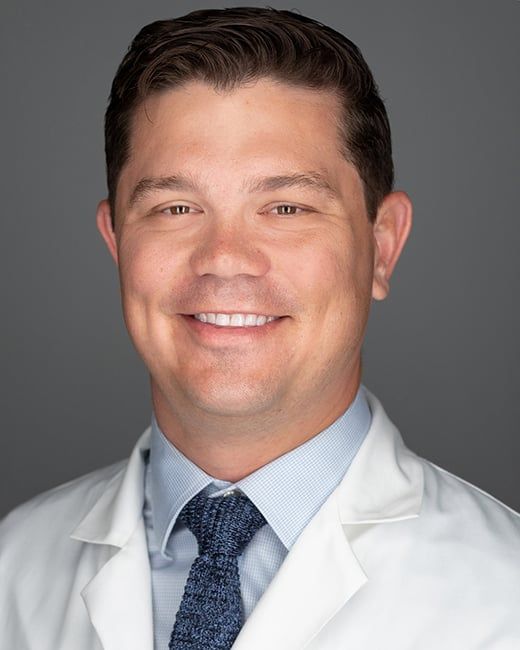
Updated results for VERIFY shared at ASH build on the 32-week data presented at the American Society of Clinical Oncology in June, when lead investigator Andrew T. Kuykendall, an associate member in the Department of Hematology at Moffitt Cancer Center, offered the first plenary talk on PV in memory.2
FDA granted rusfertide breakthrough therapy status in August 2025, and Takeda officials said Friday that they anticipated filing for approval by the end of the year.
Besides helping patients with PV avoid the standard treatment of frequent phlebotomy, the treatment improves patients’ quality of life by alleviating the extreme fatigue associated with PV, which can progress to acute myeloid leukemia.
Part 1 of the VERIFY study had 2 phases: In part 1a, covering the first 32 weeks, 293 patients were randomized to receive either rusfertide (147 patients) or placebo (146 patients) alongside current treatment. During Part 1b, through week 52, all patients could receive rusfertide; 274 continued in this phase and 267 (91%) were still in the study at week 52.
As part 2 (weeks 52-156) began, 254 patients remained in VERIFY and continued to receive rusfertide. In addition, Takeda officials said 46 patients (66%) continue to receive treatment through THRIVE, an earlier long-term extension study.
Results at 52 weeks being presented at ASH show the following:
- 61.9% of patients treated with rusfertide alongside standard of care throughout the 52 weeks experienced a durable clinical response, defined as absence of phlebotomy eligibility.
- 84.1% of those treated with rusfertide who experienced a clinical response during weeks 20 to 32—the initial evaluation window—have maintained their response.
- 77.9% of patients who crossed over from placebo to rusfertide at week 32 for Part 1b experienced a clinical response during the part 1b assessment window, which occurred during weeks 40 to 52.
- In the placebo group, the median time to the first phlebotomy was 16 weeks. The median time to first phlebotomy was not reached in either the rusfertide group in part 1a or 1b, or among those on placebo who crossed over to rusfertide after week 32.
No new safety signals emerged from week 32 to 52. The most common treatment-emergent adverse events (AE) in rusfertide-treated patients were injection site reactions (47.4%), anemia (25.6%) and fatigue (19.6%); these were mostly grade 1 or 2. Serious AEs were seen in 8.1% of patients treated with the study drug.
Molina, in the email to AJMC, said subgroup analyses are ongoing, but thus far the benefits of rusfertide appear consistent across different patient groups.
In addition, patients treated with rusfertide in both sections of phase 1 of VERIFY have reported improved quality of life on validated measures throughout the study. In the interview, Bitetti said it’s important to understand the levels of fatigue that patients with PV experience and how treatment with rusfertide over time can offer relief.
“It is, you can’t get out of bed fatigue,” Bitetti said, which makes an appointment for a painful phlebotomy all the more burdensome. “They’re very large needles…so it does damage to your veins over time,” she said.
Phuong Khanh (P.K.) Morrow, MD, head of the Oncology Therapeutic Area Unit at Takeda, emphasized that rusfertide allows patients to maintain hematocrit levels at or below 45%, offering both short- and long-term health benefits. Data show that when hematocrit levels rise above that percentage, so do the risk of venous or thrombotic events. “Those events can lead to death, but also increased risk of hospitalization, loss of work, etc.,” she said.
Data from THRIVE show that rusfertide brings a reduction in thrombotic events to levels far lower than would be seen with the natural history of PV, Morrow said. Thus, with rusfertide, “We have not just the benefit of quick and rapid reduction in hematocrit, but also long term benefits.”
“The 52-week data demonstrated the sustained efficacy of rusfertide, reducing the need for patients to receive phlebotomy while maintaining hematocrit control,” Kuykendall said in a statement from the companies. “The 32-week VERIFY primary results were already promising, and this deeper understanding of the durability of response with rusfertide is critical to inform clinical decision-making for polycythemia vera. In totality, these findings, including the long-term extension data from THRIVE, reaffirm rusfertide as a potential new addition to the standard of care for patients with PV.”
References
- Kuykendall AT, Bankar A, Pettitt K, et al. Rusfertide or placebo plus current standard of care therapy for polycythemia vera: durability response and safety results through week 52 from the randomized controlled phase 3 VERIFY study. Presented at: 67th American Society of Hematology Annual Meeting & Exposition, December 6-9, 2025; Orlando, FL; Paper 0081.
- Caffrey M. In VERIFY, rusfertide spares most patients with PV a phlebotomy for 32 weeks, improves QOL. Am J Manag Care. 2025;31(Spec No 8):SP498-SP499.


The Importance of Examining and Preventing Atrial Fibrillation
August 29th 2023At this year’s American Society for Preventive Cardiology Congress on CVD Prevention, Emelia J. Benjamin, MD, ScM, delivered the Honorary Fellow Award Lecture, “The Imperative to Focus on the Prevention of Atrial Fibrillation,” as the recipient of this year’s Honorary Fellow of the American Society for Preventive Cardiology award.
Listen


